
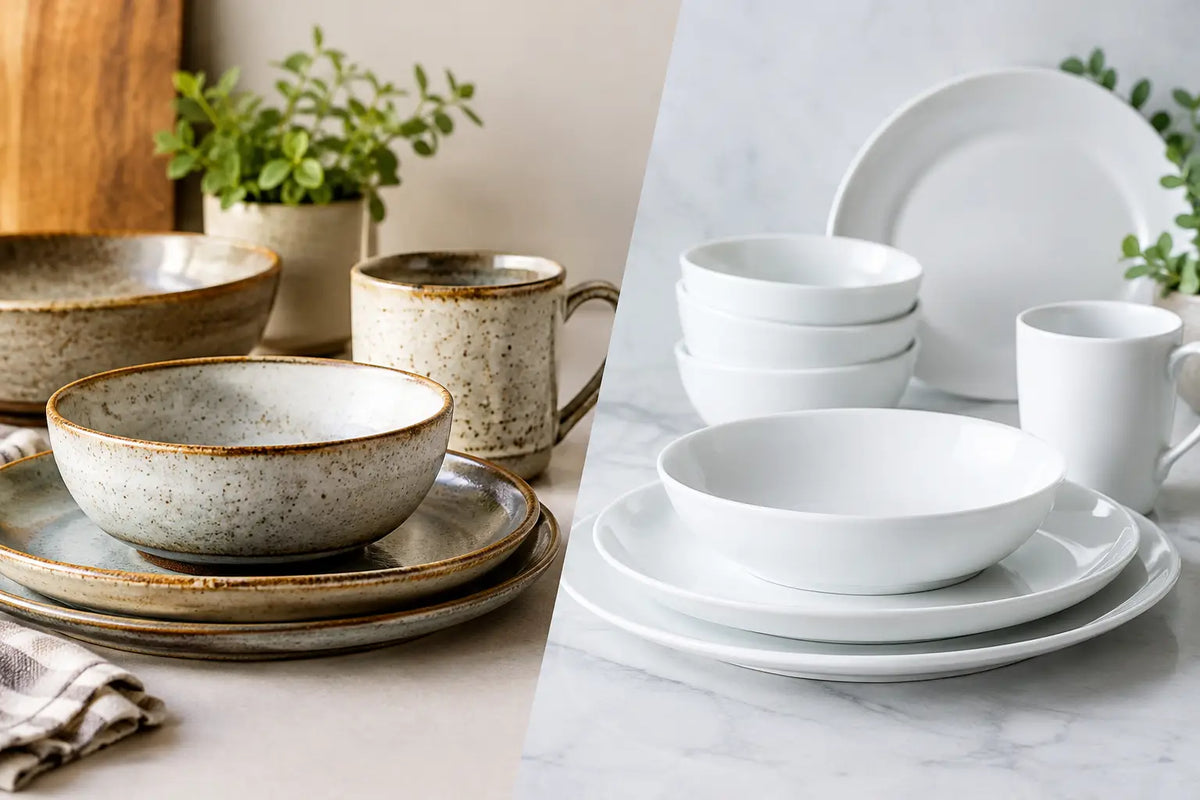
A dinner plate does more than hold a meal. It sets the mood for Sunday brunch, a holiday gathering, or the first dinner shared in a new home. When choosing stoneware versus porcelain, the right answer depends on how you entertain, what you serve, and whether you prefer relaxed warmth or refined formality at the table.
Both materials can be beautiful, durable additions to a well-appointed home. Yet they create distinctly different experiences. Stoneware brings an inviting, substantial presence to everyday dining, while porcelain is prized for its smooth finish, delicate profile, and enduring elegance.
Stoneware Versus Porcelain at a Glance
Stoneware and porcelain are both fired ceramic materials, but their composition and firing process give them different appearances and practical qualities. Stoneware is typically thicker and more substantial, often with a softly textured or hand-finished look. Porcelain is made from finer clay and fired at very high temperatures, producing a dense, smooth body that can be remarkably thin without feeling fragile.
| Feature | Stoneware | Porcelain |
| --- | --- | --- |
| Overall look | Warm, relaxed, often artisanal | Refined, polished, often formal |
| Feel in hand | Heavier and more substantial | Lighter, finer, and smoother |
| Best for | Everyday meals, casual hosting | Formal dining, entertaining, gifting |
| Common finishes | Matte, reactive glaze, rustic texture | Glossy white, detailed patterns, metallic accents |
| Style range | Modern farmhouse to contemporary | Classic, traditional, and elegant modern |
These distinctions are helpful, but they are not rules. A beautifully designed stoneware set can look sophisticated on a formal table, and a simple white porcelain dinnerware set can be practical enough for breakfast every morning.
Why Choose Stoneware?
Stoneware has an easy, welcoming character. Its weight and texture make it feel grounded, whether it is finished in a creamy neutral, a deep seasonal color, or a reactive glaze where every piece has subtle variation. For families and frequent hosts, it can make a regular weeknight meal feel more considered without making the table feel overly formal.
It is especially appealing for casual entertaining. Think generous pasta bowls, hearty soups, grain bowls, oven-to-table casseroles, and shared side dishes. Stoneware complements food with color and texture, and it works naturally with wood serveware, linen napkins, and relaxed centerpieces.
Many shoppers also appreciate that stoneware tends to feel substantial. This is not the same as indestructible. Like all dinnerware, it can chip or crack if dropped or exposed to sudden temperature changes. Still, quality stoneware is designed for regular use and can be an excellent choice for households that want a coordinated table without reserving it for special occasions.
Stoneware works beautifully when...
Choose stoneware if your table is used often and you prefer a warm, approachable presentation. It is an excellent fit for new homeowners building their first complete dinnerware collection, families replacing mismatched dishes, and hosts who favor generous serving pieces and relaxed meals.
Pay attention to the glaze. Reactive and matte finishes create character, but slight variations are part of their appeal. If you want every place setting to match exactly, a classic porcelain collection may be the better fit.
Why Choose Porcelain?
Porcelain carries a different kind of presence. Its surface is smooth and luminous, its profile is often more refined, and its elegant simplicity allows food, crystal stemware, and polished flatware to stand out. It is the material many people picture when they imagine a formal place setting, a wedding registry, or a treasured holiday table.
White porcelain is particularly versatile because it moves easily from everyday dining to special occasions. It creates a clean canvas for colorful meals and can be layered with patterned salad plates, charger plates, or seasonal serveware. Porcelain also lends itself beautifully to detailed designs, from timeless florals and border patterns to contemporary metallic accents.
For gift buyers, porcelain has lasting appeal. A dinnerware set, tea service, serving platter, or elegant set of dessert plates can mark a wedding, anniversary, housewarming, or milestone celebration with a sense of permanence. Established dinnerware brands are valued not only for their design but also for the tradition they bring to a home.
Porcelain works beautifully when...
Choose porcelain if you enjoy formal dining, prefer a lighter feel in hand, or want dinnerware that can be dressed up with crystal, fine cutlery, and statement serveware. It is also a strong choice for couples creating a wedding registry or anyone building a collection intended to last through years of celebrations.
Porcelain is often perceived as more fragile because of its fine appearance. In practice, high-quality porcelain is dense and durable. The greater concern is usually its finish: pieces with hand-painted details, metallic rims, or gold accents may require gentler care than plain white porcelain.
Consider the Table You Want to Create
The most useful way to choose between stoneware and porcelain is to picture the occasions you host. If your ideal table includes candlelight, polished stemware, a coordinated centerpiece, and a full place setting for holidays or anniversaries, porcelain offers a natural foundation. Its refined finish pairs especially well with crystal, silver-toned flatware, and traditional serveware.
If your home is where friends gather for casual suppers, birthday breakfasts, and long weekends around the table, stoneware may suit your rhythm better. Its visual weight makes a setting feel complete even with simple glassware and uncomplicated linens.
There is no need to choose only one material for every occasion. Many well-stocked homes use porcelain dinner plates for celebrations and stoneware bowls, mugs, or baking dishes for everyday comfort. This approach makes entertaining more flexible while giving each collection a clear purpose.
Care Matters More Than the Material Alone
Before placing any dinnerware in the dishwasher, microwave, or oven, review the care instructions for that specific collection. Plain stoneware and porcelain are often dishwasher safe, and many are microwave safe. Decorative details can change that. Metallic bands and gold or platinum embellishments generally should not go in the microwave, while abrupt changes in temperature can damage even durable ceramic pieces.
Avoid moving a chilled dish directly into a hot oven or setting hot dinnerware onto a cold, wet surface. When storing plates, consider soft separators or felt protectors for special collections, especially pieces with raised decoration or metallic edges. These small habits help preserve a gift-worthy finish over time.
For daily use, choose a collection that matches the care you are realistically willing to give it. A formal porcelain pattern may be worth hand washing after an anniversary dinner. For busy weekday meals, dishwasher-safe stoneware or simple porcelain can make elegant dining much easier to maintain.
Choosing Dinnerware for a Gift
For a wedding, shower, anniversary, or housewarming, porcelain is often the classic choice because it feels ceremonial and enduring. A white porcelain serving bowl or platter is particularly thoughtful because it blends into many existing collections. Patterned porcelain can be equally memorable when you know the recipient’s style.
Stoneware makes a lovely gift for someone who enjoys cooking, hosting casually, or updating a kitchen with an artisanal touch. A set of mugs, pasta bowls, or oven-to-table bakeware feels personal, useful, and immediately at home in a lived-in space.
When in doubt, choose a versatile neutral palette and a shape the recipient will use often. The best tabletop gift becomes part of familiar rituals: coffee shared in the morning, a birthday cake served after dinner, or a holiday table that grows more meaningful each year.
A beautiful table should serve the life happening around it. Choose stoneware for warmth and everyday ease, porcelain for polish and occasion-ready elegance, or make room for both and set the table according to the moment.