
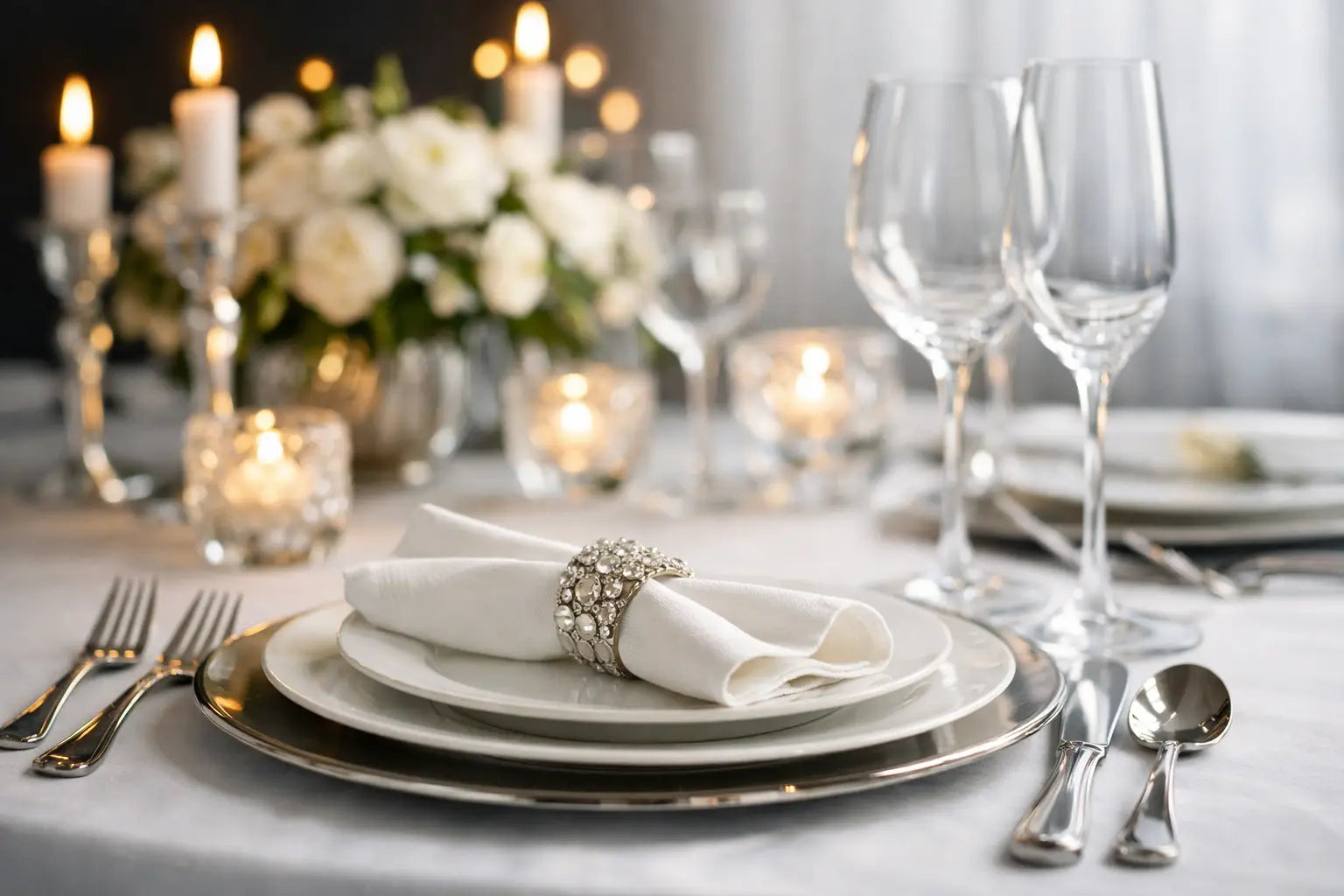
A formal table does not need to feel stiff or overdone. The best formal table setting ideas create a sense of occasion the moment guests take their seats, whether you are hosting a holiday dinner, an anniversary meal, or a beautifully planned wedding shower at home. When the dinnerware, stemware, flatware, and serving pieces work together, the table feels polished, welcoming, and memorable.
For many hosts, the challenge is not whether to set a formal table. It is how to make it look elevated without making it feel crowded, dated, or difficult to manage. That is where thoughtful coordination matters. A strong table starts with proportion, quality materials, and a clear style direction, then builds outward with layers that feel intentional rather than excessive.
Formal table setting ideas that start with the basics
The most successful formal tables begin with structure. Start with a charger or service plate to anchor each place setting. This instantly gives the table a finished look and helps frame the dinner plate, salad plate, or soup bowl. It also adds presence, which is especially useful on larger dining tables where a single plate can look visually lost.
From there, keep the classic arrangement in mind. Forks sit to the left, knives and spoons to the right, with knife blades facing inward. Stemware belongs above the knives, and bread plates sit above the forks. Even a simple formal layout looks refined when spacing is consistent and each setting has room to breathe.
This is also the stage where quality makes a visible difference. Fine bone china, polished stainless flatware, and crystal stemware catch the light in a way everyday pieces do not. If you are building a table for special occasions, investing in a coordinated set from recognized tabletop brands often gives a more cohesive result than mixing too many unrelated pieces.
Choose a style direction before you layer
One of the easiest ways to make a formal table feel expensive is to commit to a clear look. If every element is competing for attention, the table can feel busy instead of elegant. A better approach is to choose one of a few proven directions and let the details support it.
A classic white-on-white setting remains one of the most versatile choices. White dinnerware with subtle embossed detail, silver-tone flatware, clear crystal, and crisp linens create a formal look that works for everything from Easter lunch to a winter holiday dinner. This style also leaves room for florals, candles, or seasonal accents without overwhelming the table.
If you prefer something richer, a heritage-inspired setting with gold banding, detailed rims, and traditional patterns brings warmth and formality. This approach suits celebratory gatherings, family entertaining, and homes that lean toward timeless decor. It pairs especially well with crystal stemware and serving pieces that feel gift-worthy and substantial.
A third option is a modern formal table. This works beautifully when you want the table to feel clean and tailored rather than ornate. Think smooth porcelain, restrained metallic accents, sculptural glassware, and a more limited palette. The result is formal, but still approachable for contemporary homes.
1. Build around a charger plate
A charger creates a strong foundation and instantly signals a dressed table. Metallic finishes, beaded rims, or classic white designs all work, depending on the rest of your tableware. If your dinnerware pattern is detailed, choose a quieter charger. If your plates are simple, the charger can carry more of the decorative weight.
2. Layer dinnerware for depth
A formal setting looks more complete when plates are layered with purpose. A dinner plate topped with a salad plate or soup bowl gives each place setting height and presence. The key is restraint. Two or three coordinated layers are enough to feel elegant without crowding the guest.
3. Let crystal add light
Few details elevate a table like crystal stemware. Even when the rest of the setting is understated, crystal adds brilliance and movement because it reflects candlelight and overhead light so beautifully. For formal entertaining, a water glass and wine glass are usually sufficient, though larger celebrations may call for additional stemware.
4. Mix metals carefully
Silver remains the traditional standard for formal dining, but mixed metal accents can look sophisticated when handled with care. Gold-rimmed china with polished silver flatware often works well because the combination feels intentional rather than trendy. What matters is consistency. Repeating the same finish in napkin rings, candleholders, or serving pieces helps the table feel coordinated.
5. Use linens to soften the setting
Formal tables benefit from fabric. A full tablecloth creates an unmistakably dressed look, while placemats and cloth napkins offer a slightly lighter approach. If your dinnerware is highly patterned, keep the linens simple. If the plates are understated, a textured runner or tailored napkin can add needed depth.
6. Keep the centerpiece low and balanced
A formal centerpiece should enhance conversation, not block it. Low florals, grouped candleholders, or a row of smaller decorative pieces usually work better than one oversized arrangement. Scale matters here. A long dining table can handle repetition down the center, while a round table often looks best with one compact focal point.
7. Add one signature accent
This is where the table becomes memorable. It might be a gold-edged bread plate, an heirloom-inspired teacup at each setting, or a beautifully detailed serving bowl that ties the look together. One distinctive accent often creates more impact than adding multiple decorative extras.
Formal table setting ideas for specific occasions
The occasion should guide the final styling. A formal holiday table can support richer tones, layered serving pieces, and more decorative dinnerware because guests expect abundance and celebration. In that setting, ornate china, crystal, and polished serveware feel natural.
For an anniversary dinner or engagement celebration, the table often benefits from a more romantic approach. Soft white dinnerware, candlelight, metallic trim, and a restrained floral arrangement feel special without looking overly themed. This is also a smart moment to bring out pieces that feel giftable or collectible, since they add a sense of significance.
Wedding-related entertaining tends to call for a balanced look. You want the table to photograph beautifully, but it also needs to serve guests comfortably. Coordinated place settings, elegant glassware, and a few standout serving pieces usually do more than excessive decor. If the event is daytime, lighter tones and delicate patterns often feel fresher than very dark or heavy elements.
How to make a formal table feel current
Many shoppers love the idea of formal dining but worry it will look old-fashioned. In practice, the difference comes down to editing. A formal table still feels current when every piece has a job to do and the palette is not overly complicated.
One useful approach is pairing traditional dinnerware with simpler accessories. A classic patterned plate can feel fresh when set with plain linens and modern stemware. The reverse also works. Minimal white china becomes more distinctive when paired with cut crystal and a polished serving set.
It also helps to think beyond the place setting itself. Matching serveware, covered vegetable bowls, platters, gravy boats, and dessert pieces create a finished presentation that feels elevated from the first course to the last. Guests notice when the service pieces are as considered as the plates in front of them.
When to invest and when to simplify
Not every formal table needs every traditional element. If you host often, a full dinnerware collection with coordinating stemware and serveware is a worthwhile investment because it gives you flexibility for holidays, family events, and gifts. Premium pieces also tend to offer the enduring style and craftsmanship that make formal entertaining feel special year after year.
If you host less frequently, focus first on the pieces that create the most visual impact: dinner plates, accent plates, crystal glasses, and polished flatware. These carry the table. Specialty items can be added over time, especially when you want to mark a wedding, anniversary, or new home with pieces that have lasting value.
For shoppers who appreciate heritage brands, this is often where confidence matters most. Choosing established names in dinnerware and crystal can simplify the process because collections are designed to coordinate and perform well across occasions. Royal Gift is especially strong here, offering recognized tabletop brands that make it easier to build a formal setting with consistency and elegance.
A formal table should still feel welcoming
The finest tables are not the ones with the most pieces. They are the ones that make guests feel cared for. That may mean a grand layered setting for a holiday dinner, or it may mean a beautifully edited arrangement with white china, crystal, and one striking centerpiece.
If you are choosing among formal table setting ideas, start with quality, keep the layout balanced, and let the occasion guide the details. A well-dressed table does more than look beautiful. It turns dinner into an event people remember long after the last course is served.