
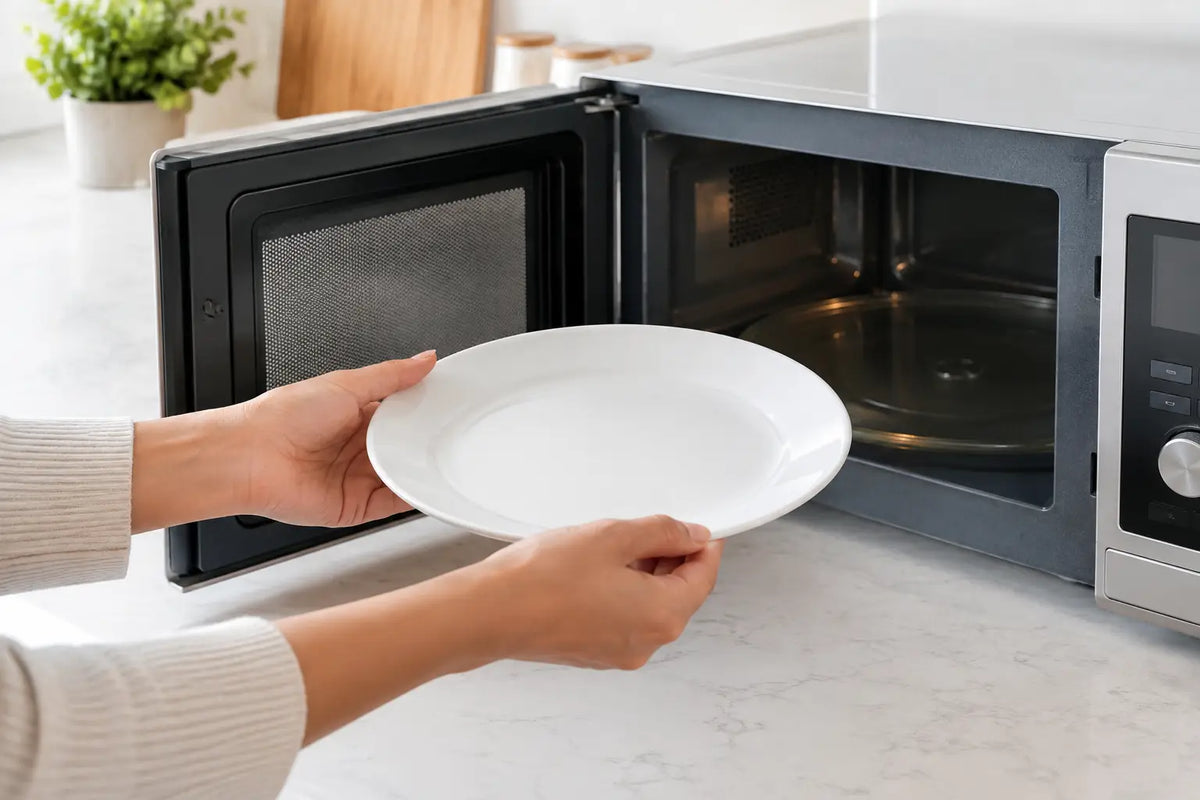
A warm dinner should not come with a worry about damaging your best dinnerware. So, are porcelain plates microwave safe? Often, yes. High-quality porcelain without metallic decoration is commonly suitable for microwave reheating. But the material alone does not guarantee it. The glaze, trim, decorative details, age of the piece, and manufacturer’s care instructions all matter.
For a polished everyday table, the simplest rule is this: use only porcelain marked microwave-safe whenever possible. That small detail helps preserve a favorite place setting while making weekday meals, family gatherings, and elegant entertaining easier to manage.
Are Porcelain Plates Microwave Safe for Everyday Use?
Porcelain is a dense, refined ceramic made from materials such as kaolin clay and fired at very high temperatures. Its low porosity and smooth glazed finish make it a popular choice for dinner plates, salad plates, bowls, and serveware. Many contemporary porcelain dinnerware collections are designed to move comfortably from cupboard to microwave, especially pieces made for daily dining.
Still, microwave-safe porcelain is not the same as heatproof porcelain in every circumstance. A plate may tolerate reheating a serving of pasta but react poorly to a sudden change from refrigerator-cold to high heat. It may also become hot from the food it holds, even when the porcelain itself is safe for microwave use.
Look first for a microwave-safe symbol or written instruction on the underside of the plate, original packaging, or product description. A respected dinnerware brand will usually provide specific use-and-care guidance. When that guidance says a piece is microwave-safe, follow any limits it provides, including recommendations about oven use, dishwasher cleaning, or temperature changes.
The Details That Can Make a Plate Unsafe
A plain white porcelain plate and an ornate formal charger may both be porcelain, yet they should not be treated the same way. Decoration is often the deciding factor.
Metallic Trim Is the Main Concern
Gold, platinum, silver, and other metallic bands can spark or arc in a microwave. Even a delicate line around the rim may contain metal. That can damage the finish, harm the microwave, or create a fire risk. Plates with a metallic monogram, gilded edge, metallic floral motif, or reflective accent should stay out of the microwave unless the manufacturer explicitly says otherwise.
This is especially relevant to heirloom-style dinnerware and formal patterns. Their detail is part of their appeal, but that level of finish often calls for gentler care. Reserve these pieces for beautifully set tables, then transfer food to a microwave-safe plate for reheating.
Decorative Glazes and Decals Need Care
Some glazes and decals are fully microwave-safe, while others are not. Older decorative pieces may have finishes that are less stable under repeated microwave heat. Hand-painted porcelain, souvenir plates, vintage dinnerware, and pieces with raised embellishments deserve extra caution.
If a plate has no care mark and its history is unclear, do not assume it is safe simply because it feels substantial. A treasured inherited pattern is better protected by handwashing and serving at the table than by testing it in an appliance.
Cracks, Chips, and Crazing Change the Equation
A plate with a hairline crack, chip, or fine web of lines in the glaze can be more vulnerable to heat. Moisture may settle into damaged areas, and rapid heating can worsen the crack or cause a piece to break. Retire damaged porcelain from microwave duty, particularly if you notice the plate becoming unusually hot or making a cracking sound during use.
How to Check a Porcelain Plate Before Microwaving
The manufacturer’s label is always the best answer. If it is missing, inspect the plate carefully before placing it in the microwave. Check the rim, center decoration, and underside for metallic color or reflective detailing. Look for chips, worn glaze, cracks, and faded care instructions.
For an unmarked, plain porcelain plate in good condition, a simple water test can offer a useful indication. Place a microwave-safe cup filled with water on the plate and heat it for about one minute. The water should become hot. The plate may feel slightly warm, particularly where it touched the cup, but it should not become extremely hot while the water remains only moderately heated.
If the empty area of the plate becomes very hot, do not use it for microwave reheating. Stop immediately if you see sparks, hear popping, or smell anything unusual. Never perform this test on a plate with metal trim, a decorative metallic finish, visible damage, or sentimental value. The risk is not worth it.
Why a Microwave-Safe Plate Can Still Feel Hot
It is easy to mistake a hot plate for an unsafe one. In many cases, heat transfers from the food to the porcelain after the microwave cycle ends. A plate under a steaming casserole or a bowl of soup may become hot enough to require oven mitts, even though it is entirely microwave-safe.
The difference is where the heat comes from. If the food is hot and the plate is warm around the food, that is generally expected. If the plate itself becomes excessively hot in a short test while the food or water is not, the porcelain may be absorbing microwave energy and is not a good choice for regular use.
Use caution with dense foods, sauces, and oils, which retain significant heat. Let the plate stand for a moment after heating, and use a towel or mitt when necessary. A simple pause helps protect both hands and the table setting you have taken care to create.
Best Practices for Microwaving Porcelain Dinnerware
Even microwave-safe porcelain benefits from considerate use. Avoid heating an empty plate, which provides no food or liquid to absorb the microwave energy. Reheat in short intervals, especially for small portions or foods that heat unevenly.
Avoid dramatic temperature shifts. Do not take a plate directly from the refrigerator or freezer and place it into a high-power microwave unless its manufacturer specifically permits it. Likewise, let a hot plate cool before rinsing it under cold water. Sudden changes in temperature can cause thermal shock, leading to cracks or breakage.
When covering food, use a microwave-safe cover that does not seal tightly. This prevents splatter without trapping too much steam. If you are warming a plateful of food for guests, choose a microwave-safe porcelain dinner plate rather than a decorative serving platter unless the platter is clearly labeled for microwave use.
Choosing Porcelain That Fits How You Entertain
The best dinnerware is not only beautiful on the table. It should also suit the rhythm of your home. A formal pattern with platinum trim may be ideal for holiday dining, weddings, anniversaries, and celebratory meals. A coordinating plain porcelain set can make daily reheating more convenient without sacrificing a refined presentation.
When selecting new plates, look beyond color and pattern. Review whether each collection is described as microwave-safe, dishwasher-safe, or suitable for ovens and warming cabinets. These practical details are valuable when building a registry, choosing a housewarming gift, or replacing everyday dishes with something more elevated.
At Royal Gift, shoppers can pair elegant dinnerware with the kind of care information that helps each piece remain part of the home for years of shared meals and special occasions.
A well-chosen porcelain plate should make serving feel effortless, whether you are reheating lunch or setting the table for a celebration. Keep metallic and delicate decorative pieces for their finest moments, and let clearly marked microwave-safe porcelain handle the everyday warmth with confidence.