
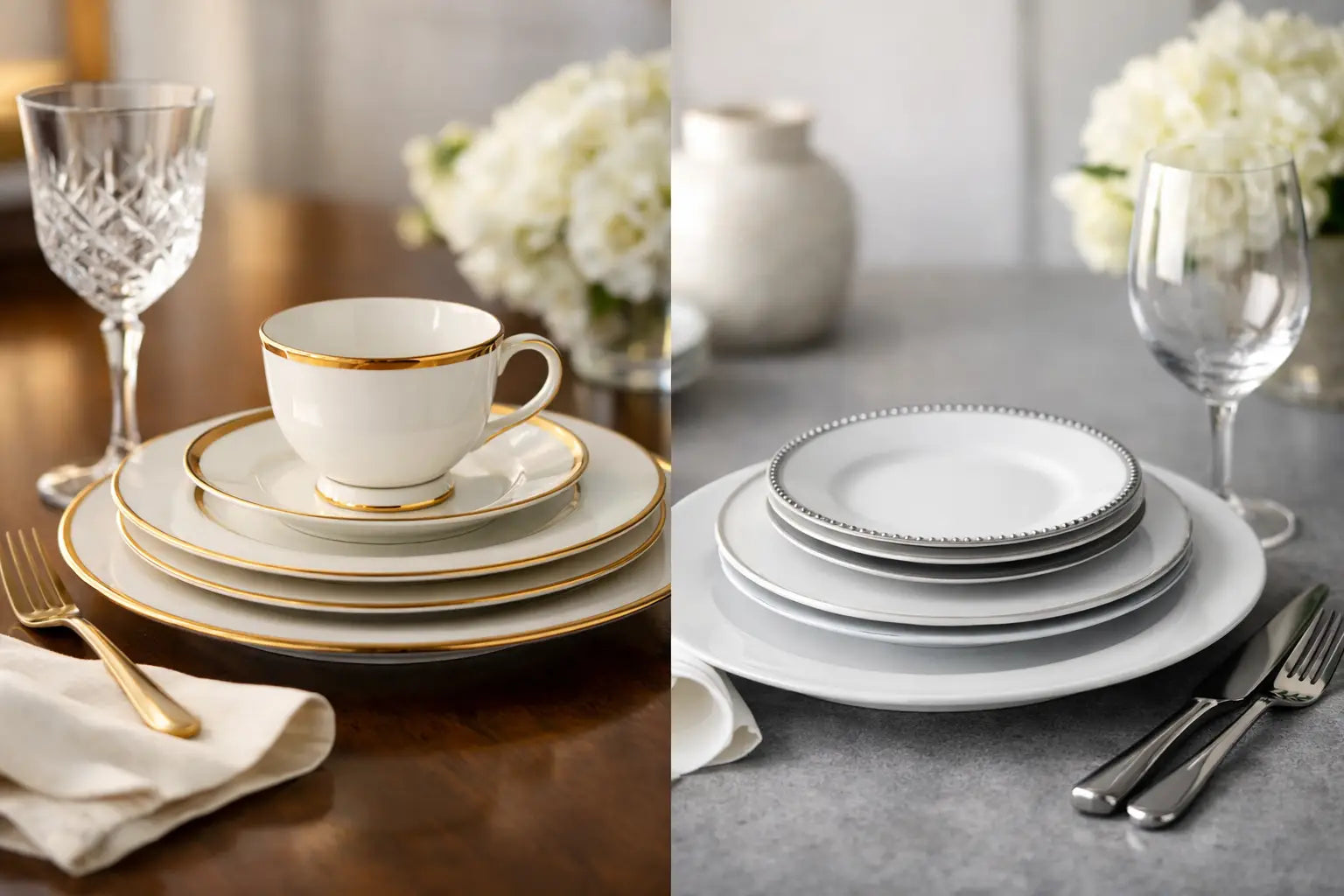
A dinnerware pattern earns its place slowly: through birthday breakfasts, holiday tables, anniversary dinners, and the ordinary evenings that deserve better than a mismatched cupboard. In the choice between Lenox vs Mikasa dinnerware, both names bring recognized quality and gift-worthy appeal, but they create very different impressions on the table.
Lenox often appeals to the shopper building a classic, polished setting with a sense of occasion. Mikasa offers a broad range that can feel equally refined while leaning more contemporary, relaxed, or practical depending on the collection. The better choice is not simply the more formal one. It is the one that suits how you host, what you already own, and whether the set is intended for everyday meals, a bridal registry, or a meaningful milestone gift.
Lenox vs Mikasa Dinnerware: The Essential Difference
Lenox is closely associated with American formal dining traditions. Its most recognizable dinnerware collections often use graceful silhouettes, detailed borders, subtle texture, and classic color stories. Many people choose Lenox when they want a table that feels established and celebratory - the kind of setting that pairs naturally with crystal stemware, polished flatware, and a carefully arranged centerpiece.
Mikasa has a more varied personality across its collections. Its assortment may include clean white porcelain, sculptural stoneware, modern geometric detail, and patterns that bridge casual entertaining with special-occasion dining. This makes Mikasa especially appealing for new homeowners and couples who want one versatile set that can handle weeknight dinners yet still look considered when friends come over.
Neither brand is limited to one look or material. The collection matters more than the logo alone. Before choosing, look closely at the specific pattern's material, rim shape, number of place settings, care instructions, and available serving pieces.
Material and Everyday Performance
Dinnerware should look beautiful, but it also needs to fit the rhythm of your home. Lenox and Mikasa both offer collections in materials such as bone china, porcelain, and stoneware. Each has a different character.
Bone china is prized for its fine appearance, lightness, and luminous finish. It is a natural choice for formal tables, wedding gifts, and collectors who enjoy a more elevated presentation. Despite its delicate look, quality bone china can be very durable for regular use. Still, pieces with metallic accents, hand-applied decoration, or more intricate finishes may need gentler care and may not be microwave-safe.
Porcelain usually offers a clean, polished feel with excellent versatility. A white porcelain set can become the foundation of a tableware collection, working with seasonal linens, colorful glassware, and nearly any serveware. It is an especially sensible option for someone who wants classic styling without reserving the dishes for holidays.
Stoneware tends to feel more substantial and relaxed. It may feature artisan-inspired glazes, soft neutral colors, or organic forms that suit casual dining. Mikasa's broader contemporary direction can make it particularly attractive in this category, though Lenox also offers options beyond traditional formal china. Stoneware can be ideal for family meals, but buyers should expect a heavier feel and should always confirm the manufacturer’s instructions for dishwasher and microwave use.
The practical rule is simple: do not assume every piece from either brand has the same care requirements. Check the details of the exact pattern, especially if your household relies on the dishwasher or uses the microwave regularly.
Which Style Feels Right at Home?
Choose Lenox when your vision includes timeless elegance. A Lenox pattern can anchor a formal dining room, complement traditional or transitional décor, and make even a simple menu feel like an occasion. White-on-white embossing, delicate florals, platinum or gold-tone borders, and refined shapes are all looks commonly associated with the brand’s formal heritage.
That said, Lenox is not only for large holiday gatherings. A restrained white pattern can be used every day, then dressed up with charger plates and crystal for celebrations. This is a smart route for buyers who prefer fewer, better pieces rather than separate casual and formal sets.
Choose Mikasa when you want a wider path between polished and everyday. Many Mikasa looks suit homes with modern, coastal, minimalist, or transitional interiors. The brand can be a strong fit for hosts who favor open shelves, layered place settings, natural textures, and dinnerware that does not feel too precious to use.
For a wedding or anniversary gift, the recipient's lifestyle should guide the choice. A couple who loves formal entertaining may appreciate Lenox's tradition and ceremonial presence. A couple furnishing their first home may get more immediate enjoyment from a versatile Mikasa set with clean lines and easy-care convenience.
Consider the Rest of the Table
Dinnerware rarely stands alone. If the recipient already owns crystal, silver-tone flatware, or a formal tea set, Lenox may create a more unified setting. If their home favors contemporary glassware, wood serving boards, and relaxed entertaining, Mikasa may feel more natural.
White dinnerware remains the easiest option to build around. It allows you to introduce personality through linens, napkins, salad plates, serving bowls, and seasonal décor without replacing the foundation of your table.
Value Is More Than the Price Per Place Setting
Comparing price without comparing what is included can be misleading. A set may contain dinner plates, salad plates, bowls, and mugs, while another may omit mugs or offer a different bowl size. One pattern may have extensive matching serveware available, while another is designed as a compact everyday set.
For a first complete collection, prioritize the pieces you will use most often. Four place settings may suit a smaller household, but eight or twelve place settings can be far more practical for families and frequent hosts. Add serving platters, vegetable bowls, gravy boats, and accent plates gradually if you enjoy entertaining. Building over time is often more realistic than purchasing every coordinating piece at once.
Longevity also matters. Classic patterns tend to remain attractive long after a passing color trend has faded. If you are selecting a wedding gift or creating a registry, a pattern with a timeless profile and readily available companion pieces has lasting value. Royal Gift shoppers often appreciate this approach because dinnerware can become part of the celebration rather than a purchase that is quickly replaced.
How to Make the Final Choice
Think first about the most demanding moment the dinnerware will need to handle. Is it a holiday dinner for ten, a Sunday brunch with family, or daily meals with children? Then decide how formal you want that moment to feel.
Lenox is often the stronger choice for a traditional, heirloom-inspired table and for gifts intended to mark weddings, anniversaries, and major milestones. Mikasa is often the stronger choice for adaptable style, contemporary homes, and diners who want polished pieces they can reach for without hesitation. Yet there is meaningful overlap: a simple Lenox porcelain pattern can be wonderfully practical, and a refined Mikasa bone china collection can look entirely at home at a formal dinner.
If you are torn, choose the pattern that still looks inviting with your everyday meal on it. The finest dinnerware is not hidden away waiting for the perfect event. It helps turn the gathering already on your calendar into one worth remembering.