
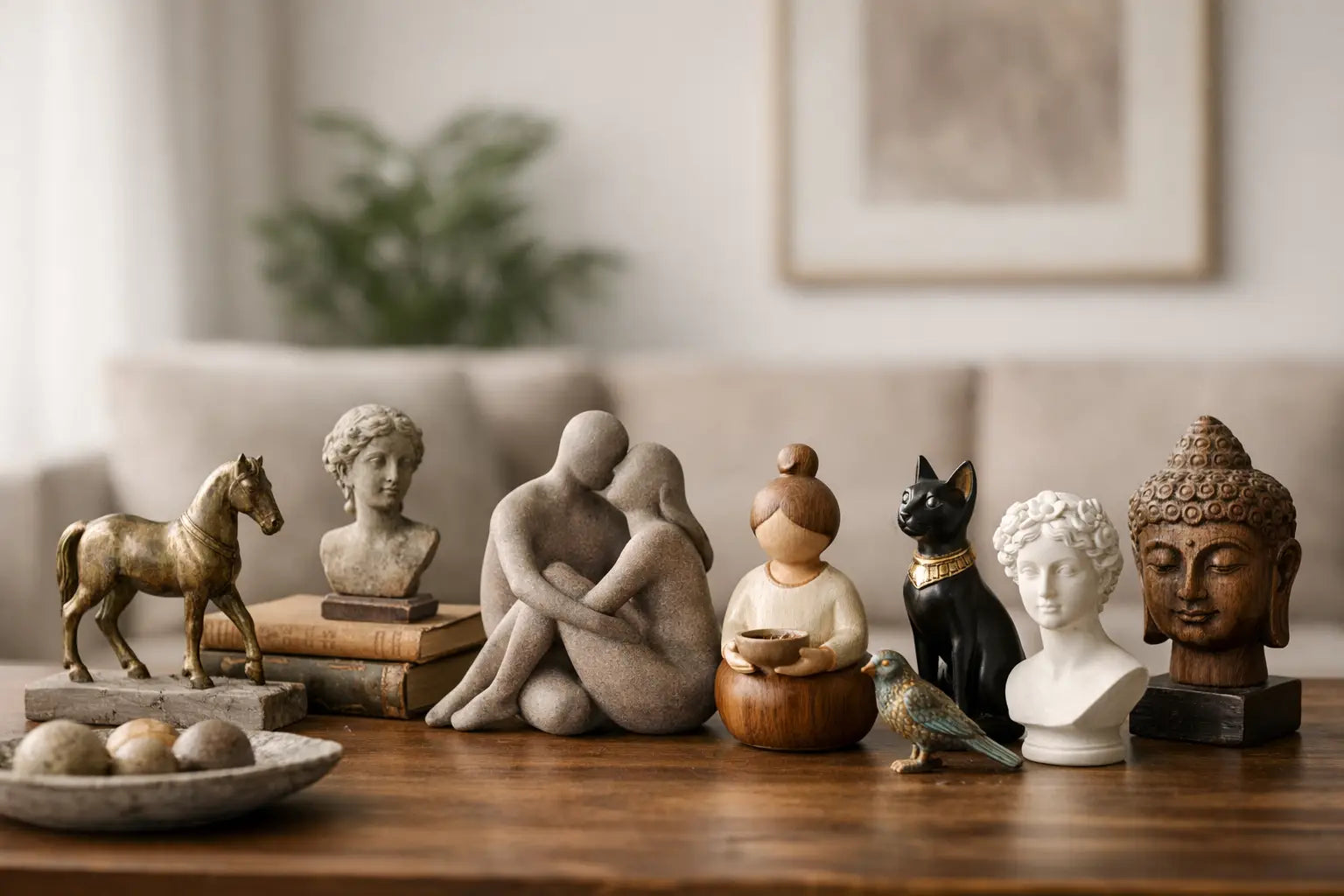
A room can be beautifully furnished and still feel unfinished. Often, the missing element is not another large piece of furniture but a smaller detail with personality. Decorative figurines for home bring that finishing touch to a mantel, console, bookshelf, or dining room display. Chosen with care, they create a sense of history, celebrate a personal interest, and give everyday spaces the composed look of a well-loved home.
Figurines are especially appealing because they do more than fill a surface. A graceful porcelain bird can soften the clean lines of a modern sideboard. A sculptural couple can mark an anniversary. A religious figure can hold meaning far beyond its material value. The best choices feel intentional rather than merely decorative.
Choose Decorative Figurines for Home by Room
The right figurine depends on where it will live. Before choosing a style, consider the scale of the surface, the colors already present, and the amount of attention the piece should command. A finely detailed figurine deserves enough open space to be appreciated. A small accent piece can add charm without competing with family photographs, lamps, or floral arrangements.
Living room and mantel displays
The living room is often the easiest place to begin. Mantels, coffee tables, side tables, and bookcases provide natural settings for decorative objects that invite a closer look. Classic porcelain florals, animal figures, dancers, or sculptural designs work particularly well here because they add form without making the room feel overly formal.
For a mantel, aim for balance rather than strict symmetry. A larger figurine on one side may be paired with a lower candleholder, vase, or framed photograph on the other. If displaying two matching figurines, place them with enough space between them so the arrangement reads as deliberate. On a bookshelf, position a figurine in front of a small stack of books or beside a horizontal frame to create depth.
Dining room and entertaining spaces
In a dining room, figurines can reinforce the atmosphere of gracious entertaining. A classic porcelain piece on a buffet, a crystal-inspired accent on a bar cabinet, or a refined seasonal figure on a sideboard gives the room a finished presentation even when the table is not set.
Keep dining displays relatively restrained. The visual focus should remain on dinnerware, serveware, and the food when guests arrive. One statement figurine, or a small pair placed at either end of a buffet, usually has more impact than a crowded collection. Pieces with ivory, white, gold, silver, or soft pastel details coordinate easily with formal tabletop settings.
Entryways, bedrooms, and personal corners
An entry console offers a welcoming place for one distinctive object. It may be a serene angel, an elegant animal, or a figurine with a soft metallic finish that catches the light near a mirror. The goal is to set a tone for the home without creating clutter in a high-traffic area.
Bedrooms are ideal for more personal selections. Romantic couple figurines, a keepsake from a wedding or anniversary, or an heirloom-style porcelain piece can make a dresser or vanity feel considered and intimate. In a nursery or child’s room, choose durable pieces thoughtfully and keep fragile figurines safely out of reach.
Start With Meaning, Then Consider Style
A figurine becomes more memorable when it reflects the people who live in the home. That might mean a horse for an equestrian enthusiast, a bird for a nature lover, a graceful ballerina for someone connected to dance, or a religious piece for a family tradition. These details prevent decor from looking copied from a showroom.
Style still matters, of course. Traditional interiors often suit ornate porcelain, hand-painted florals, classic couples, and detailed animal figures. Homes with transitional decor can accommodate timeless forms in neutral palettes, especially white porcelain, clear crystal, or soft gold accents. In a contemporary setting, select a figurine with cleaner lines and a simpler silhouette so it complements rather than interrupts the room.
There is no requirement for every decorative object to match. In fact, a home looks more collected when different pieces share a common thread rather than identical finishes. That thread may be a palette of warm neutrals, a preference for fine porcelain, a shared subject such as birds or florals, or a balance of polished and matte surfaces.
How to Arrange Figurines Without Creating Clutter
The difference between an elegant display and a crowded shelf is editing. A figurine needs visual breathing room, particularly if it has delicate details, a reflective finish, or a meaningful story. Instead of placing every treasured piece in one location, rotate a few selections seasonally or move them between rooms.
Groupings are most successful when the pieces vary slightly in height and shape. A tall sculpture beside a lower lidded box and a small figurine can create an appealing arrangement, especially on a console or buffet. Keep the materials connected: porcelain with a polished frame, crystal near glassware, or a gold-accented piece beside a metallic candleholder.
Avoid placing too many small figurines in a straight line. While a matched pair can look formal and elegant, several unrelated items lined across a shelf can feel accidental. Create one focal point, then let supporting objects frame it. If a display feels busy, remove one or two pieces before adding anything new.
Light also changes how a figurine is perceived. A table lamp can bring out the soft glaze of porcelain, while daylight gives crystal and glass accents their sparkle. Do not place delicate pieces where direct sun may fade painted details over time, and keep them away from unstable ledges or areas where doors frequently close.
Materials That Match the Occasion
Porcelain remains a favorite for decorative figurines because it communicates refinement, craftsmanship, and tradition. Fine details, soft color, and graceful forms make porcelain appropriate for formal rooms, milestone gifts, and collector displays. It can be delicate, however, so it is best suited to stable surfaces and homes where it can be cared for properly.
Crystal and glass figurines bring lightness and shimmer. They are especially striking on a bar cabinet, in a curio display, or near a window where they can reflect natural light. Their clean appearance suits both traditional and contemporary spaces, although clear pieces may disappear against a visually busy background.
Resin, metal, wood, and ceramic designs offer different advantages. Resin can capture intricate sculptural detail and may be a practical option for larger pieces. Metal adds warmth or modern contrast, depending on the finish. Wood feels organic and relaxed, while ceramic can bridge casual and formal decor. The best material is the one that suits the room, the recipient, and the level of care the piece will receive.
Figurines as Gifts for Milestones and Traditions
A decorative figurine is an especially thoughtful gift when it marks a moment that deserves to be remembered. Unlike a purely practical item, it remains visible long after the celebration has passed. Each time it is displayed, it can bring back the occasion and the person who gave it.
Wedding and anniversary gifts often call for romantic designs, elegant pairs, or refined porcelain pieces that can become part of a couple’s first home together. For a housewarming, choose a versatile accent that works across a range of decor styles, such as a classic animal figure or an understated sculptural piece. Religious figurines can be meaningful choices for baptisms, communions, confirmations, and other family milestones.
When gifting a figurine, presentation matters. Select a piece that feels substantial without requiring the recipient to completely redesign a room around it. Established heritage brands can be reassuring for gift buyers because their quality, craftsmanship, and recognizable design language carry a sense of occasion. Royal Gift offers an elegant way to browse decor and gift-worthy pieces alongside tabletop essentials for the celebrations that bring people together.
Care That Preserves the Details
Most figurines need only gentle care. Dust regularly with a soft, dry cloth or a clean makeup brush for fine crevices. Avoid harsh cleaners, abrasive sponges, and prolonged moisture, particularly on hand-painted porcelain, metallic accents, or pieces with delicate applied details.
When moving a figurine, hold it from the strongest part of its form rather than a narrow arm, flower, wing, or handle. Store original boxes when possible, especially for collectible or heirloom-quality pieces. A little care protects both the finish and the story attached to it.
A well-chosen figurine does not need to announce itself loudly. It simply gives a room a point of warmth, a reason to pause, and a detail that feels distinctly yours. Choose the piece that suits the space, honors the occasion, and still makes you smile when you pass it every day.