
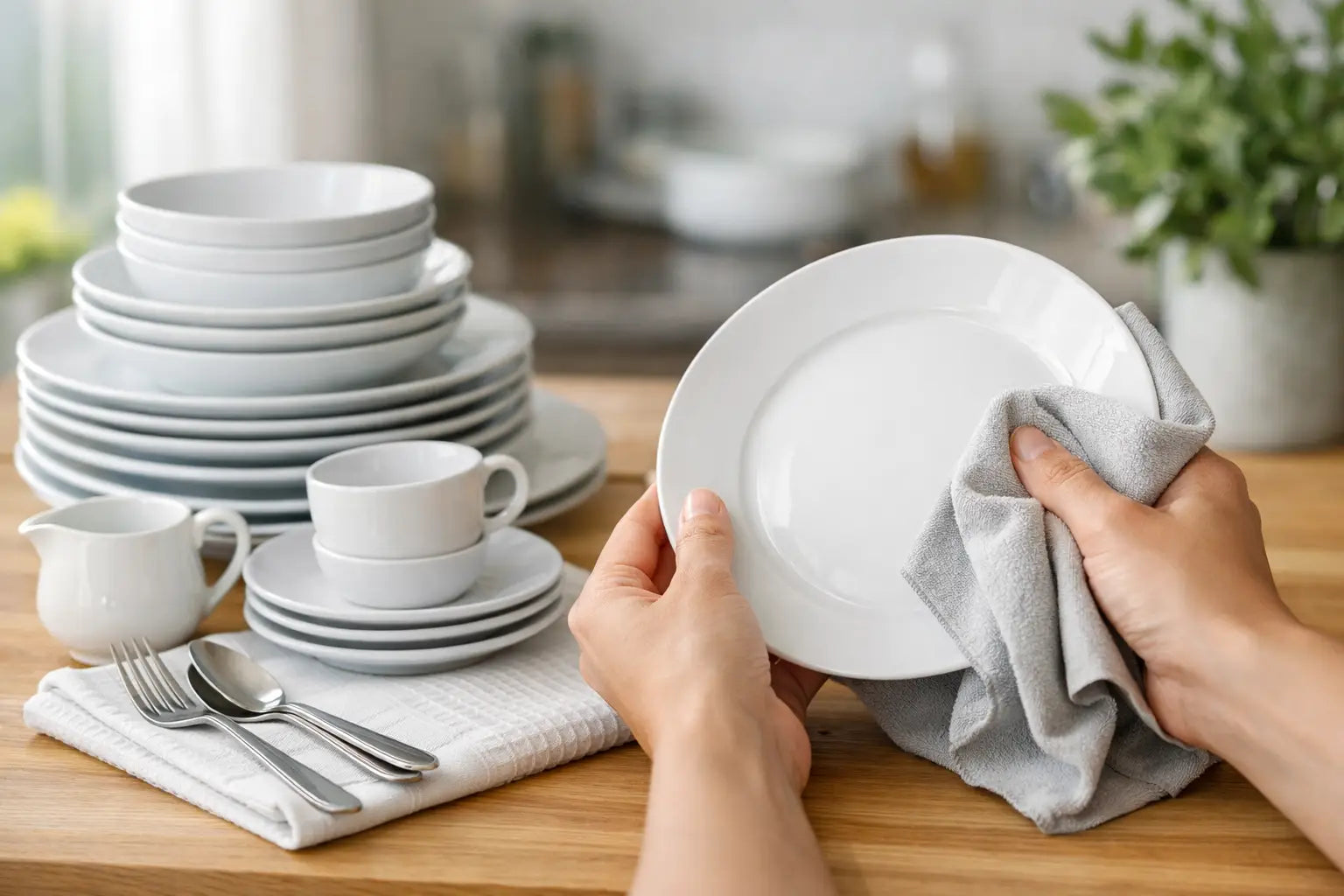
A porcelain table setting earns its place in the home through use: a birthday brunch served on patterned plates, a holiday dessert in a favorite bowl, or tea poured into cups saved for a quiet afternoon. Knowing how to care for porcelain lets those meaningful pieces remain beautiful without making every meal feel overly precious.
Porcelain is fired at very high temperatures, giving it a smooth, dense surface that is well suited to dining and display. Yet the glaze, painted decoration, metallic trim, and delicate handles deserve thoughtful handling. The right routine depends on whether you are caring for everyday dinnerware, heirloom teacups, serving pieces, or decorative porcelain figurines.
Start With the Maker's Care Instructions
The most reliable guidance comes from the piece itself or its original packaging. Many contemporary porcelain dinnerware collections are dishwasher and microwave safe, particularly simple white patterns without metallic details. Others, especially pieces with gold or platinum bands, hand-painted accents, raised ornamentation, or antique finishes, should be washed by hand and kept out of the microwave.
Do not assume an entire set has identical care needs. A plain porcelain dinner plate may tolerate a dishwasher while a matching teapot, lidded sugar bowl, or serving platter may be safer in the sink. Older and vintage pieces call for extra caution because their glazes and decorative finishes may have changed with age.
When in doubt, choose gentle hand washing. It takes only a little longer and is a sensible trade-off for formal dinnerware, collectible patterns, and gifts intended to be enjoyed for years.
How to Care for Porcelain When Washing
Wash porcelain soon after a meal when possible. Letting sauces, coffee, tea, or deeply colored foods sit for hours can make stains more stubborn, especially in cups and serving bowls. First allow very hot pieces to cool naturally. Moving porcelain directly from a hot oven or dishwasher into cold water can cause thermal shock, which may lead to fine cracks or breakage.
For hand washing, line the bottom of the sink with a soft towel or rubber mat. This small step prevents a plate from striking a hard surface if it slips. Use warm water, a mild dish soap, and a soft sponge or cloth. Avoid scouring pads, abrasive powders, and stiff brushes, which can dull a glossy glaze or wear down a decorative border over time.
Wash one piece at a time rather than stacking several plates in soapy water. Handles, rims, and finials are particularly vulnerable when pieces knock together. Hold cups by the body as well as the handle, and support larger platters or tureens from underneath with both hands.
If a porcelain collection is marked dishwasher safe, place items securely so they will not touch during the cycle. Use a mild detergent and a normal or gentle setting. Skip high-heat drying when practical, as repeated high heat can be hard on metallic accents and may leave mineral spotting. Remove the pieces promptly and dry them with a soft, lint-free towel.
Treat Stains Gently, Not Aggressively
Tea and coffee are the most common culprits behind discoloration inside porcelain cups. A soft cloth with a paste of baking soda and water can often lift light staining. Rub with minimal pressure, rinse thoroughly, and repeat only if needed. For more persistent marks, a porcelain-safe cleaner may help, but test it first on an inconspicuous area and follow its directions carefully.
Never use bleach on decorated porcelain, and avoid harsh chemical cleaners around gold, platinum, or hand-painted details. These products can fade color, weaken metallic bands, or leave a cloudy appearance on the glaze. If a stain does not respond to gentle cleaning, it is usually wiser to accept a little evidence of a well-loved piece than risk permanent damage with an abrasive remedy.
Gray marks sometimes appear on plates after contact with stainless steel flatware. They are often metal transfer rather than scratches in the porcelain itself. A mild, nonabrasive porcelain cleaner used sparingly may remove them. If the mark catches a fingernail, however, it may be a true scratch or glaze wear and should not be aggressively polished.
Store Dinnerware So Each Piece Is Protected
Stacking is efficient, but porcelain should never be stacked carelessly. Place a soft plate protector, felt round, or clean cotton cloth between frequently used dinner plates. This prevents the fine rubbing that can gradually wear a rim or leave small scratches in a glossy finish. Avoid newspaper, as ink can transfer to unglazed areas or fabrics.
Store plates in low, stable stacks rather than tall towers. Serving platters and chargers are best stored vertically in a rack designed for dinnerware or separated with padded protectors. Keep cups upright and avoid hanging delicate handled cups for long periods unless the rack fully supports their weight.
For formal sets used seasonally, choose a dry cabinet away from extreme temperature shifts. Basements, garages, and attics are generally poor choices because moisture and fluctuating temperatures can affect glazes, adhesives, and decorative elements. A cabinet close to the dining area makes it easier to bring fine dinnerware into regular rotation.
Protecting Teapots, Figurines, and Decorative Pieces
Decorative porcelain needs protection from dust as well as accidental contact. Display figurines on stable shelves away from doors, busy walkways, and the reach of curious pets or children. Use museum putty or discreet non-slip pads beneath a valuable item if the display surface is smooth.
When storing a teapot, sugar bowl, or lidded serving piece, wrap the lid separately in acid-free tissue or soft cloth and place it beside, rather than inside, the vessel. A lid can chip a rim if it shifts during storage. Never lift a teapot by its lid or lift a figurine by a narrow detail such as a flower, hand, or wing.
Dust decorative porcelain with a soft, dry brush or microfiber cloth. For crevices, a clean makeup brush works well. Do not spray polish or household cleaner directly on the piece, particularly around painted areas or joins.
Be Careful With Heat and Everyday Use
Porcelain is durable, but it does not respond well to sudden temperature changes. Avoid placing a chilled plate in a hot oven, pouring boiling liquid into a cold cup, or resting a hot serving dish on a wet countertop. If oven use is permitted by the manufacturer, place the dish in a cool oven and let both heat gradually together.
Microwave use depends on decoration. Any porcelain with metallic trim should stay out of the microwave, even if the metal detail looks minimal. Pieces with a crack, chip, or crazing in the glaze should also be retired from food service if there is any concern about their condition. They can still be displayed or repurposed thoughtfully, but should not be subjected to heat.
Use wooden, silicone, or nylon utensils in porcelain bakeware and serving bowls when possible. Metal serving spoons can leave transfer marks, while cutting directly on a porcelain plate can scar the glaze. A carving board beside the table is kinder to both the dinnerware and the meal presentation.
Inspect Pieces Before Special Occasions
Before setting the table for a wedding shower, anniversary dinner, or holiday gathering, inspect each piece in good light. Look for chips along rims, loose handles, hairline cracks, and fine web-like crazing. Run a fingertip carefully around the edge of plates and cups to catch small chips that may be difficult to see.
A clean, polished presentation matters. Give serving pieces a quick wash even if they have been stored, then dry them fully before arranging the table. Pairing cared-for porcelain with coordinated glassware, flatware, and linens creates the composed, welcoming setting that makes guests feel celebrated.
At Royal Gift, elegant dinnerware is chosen for occasions worth remembering, but it should also be part of the moments between them. Handle each piece with care, use it with confidence, and let its beauty become part of the traditions your table creates.