
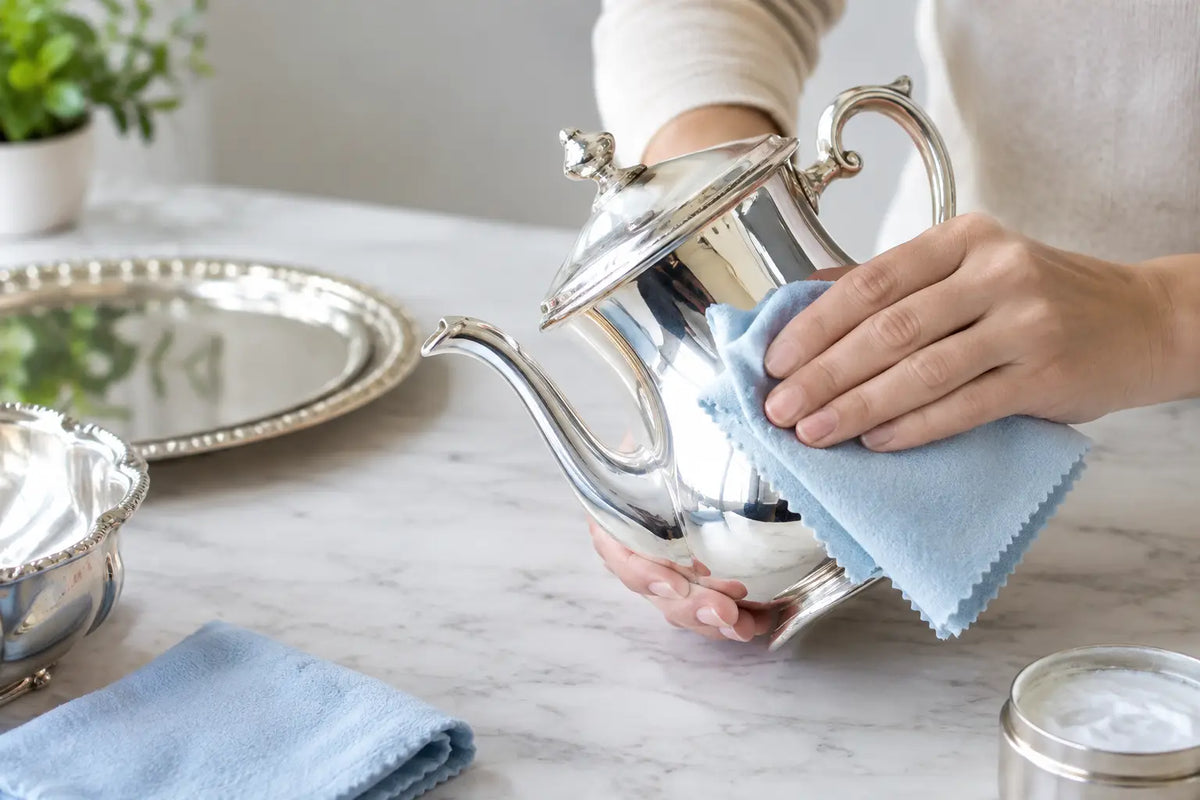
A silverplate tea tray, serving bowl, or set of flatware can make an everyday table feel ready for a celebration. Learning how to polish silverplate properly is less about making it aggressively bright and more about preserving its refined finish. Unlike solid sterling silver, silverplate has a thin layer of silver over a base metal, so the right technique matters every time you remove tarnish.
With gentle care, silverplate can remain a beautiful part of holiday dinners, wedding gifts, family gatherings, and formal entertaining for years to come. The goal is a soft, even luster that complements crystal, dinnerware, and a thoughtfully set table.
First, Make Sure It Is Silverplate
Before polishing, check the underside of the piece for markings. Sterling silver is often marked “Sterling,” “925,” or “.925.” Silverplate may be marked EPNS, EPBM, A1, or simply with a maker’s stamp. Some pieces have no clear hallmark, particularly older serving items or decorative frames.
Silverplate is not inferior in appearance. A well-made silverplate piece has the same graceful glow that makes silver so appealing on a formal table. It simply needs a lighter hand. The silver layer can wear down over time, especially on the high points of handles, rims, tray edges, and raised patterns. Once the base metal shows through, polishing cannot restore the original plating.
If the item has sentimental or antique value, and you notice coppery, yellowish, or gray metal showing beneath the surface, avoid further polishing. A professional restoration specialist can advise whether replating is worthwhile.
What You Need to Polish Silverplate
You do not need a complicated collection of products. A few carefully chosen supplies will protect the finish and keep the process simple:
- A silver polish or cream clearly labeled safe for silverplate
- Two or three soft, clean cotton cloths or microfiber cloths
- A soft-bristled toothbrush for detailed engraving or pierced patterns
- Warm water and mild dish soap for initial cleaning
- Cotton swabs for small crevices and decorative details
How to Polish Silverplate Step by Step
Begin with a clean, dry work surface covered with a soft towel. This prevents accidental scratches and gives delicate pieces, such as candlesticks or picture frames, a safer place to rest.
Wash Away Surface Soil First
If the silverplate has fingerprints, food residue, dust, or old waxy buildup, wash it before applying polish. Use warm water, a small amount of mild dish soap, and a soft cloth. Do not soak hollow-handled flatware, antique pieces, or items with glued-on details, wood, mother-of-pearl, or felt backing.
Rinse carefully with clean water, then dry immediately and completely with a soft towel. Water spots can leave a cloudy appearance, and moisture trapped in joints or decorative openings can encourage tarnish.
Apply Polish Sparingly
Place a small amount of silverplate-safe polish on a soft cloth, not directly on the item. Work on one manageable area at a time using light pressure and straight, back-and-forth strokes. For flatware, follow the length of the handle and the bowl of the spoon or fork rather than rubbing in tight circles.
This is where patience protects the finish. Heavy pressure does not remove tarnish more effectively. It only increases the risk of thinning the silver layer. On a serving tray, move methodically across the surface so the finish develops evenly rather than becoming patchy.
For ornate handles, engraved borders, or pierced serving pieces, use a soft toothbrush or cotton swab with a trace of polish. Keep the product out of deep seams whenever possible, then remove any residue carefully. Dried polish trapped in decorative details can make a beautiful pattern look dull.
Buff to a Gentle Shine
Once the polish has lifted the tarnish according to the product directions, use a second clean cloth to buff the surface lightly. Continue until no dark residue transfers to the cloth and the metal feels smooth.
Do not expect silverplate to resemble chrome. Its beauty lies in its warmer, softer reflection. A slightly mellow finish often suits traditional flatware, tea services, and heirloom serveware better than a harsh, mirror-like shine.
Inspect Before Putting It Away
Hold the piece near a window or under good indoor lighting. If small tarnished areas remain, repeat the process only where needed. There is no advantage in polishing a clean section again.
Pay close attention to raised edges, handle tips, and the center of a platter, where frequent contact can wear the plating. If these areas look thin or show a different metal color, stop polishing them. Gentle cleaning and careful storage are the best protection from that point forward.
How Often Should You Polish Silverplate?
It depends on how often the piece is used and where it is stored. Flatware used regularly may need only a gentle polish once or twice a year because frequent handling and washing can slow tarnish. A formal serving tray displayed in a cabinet may need attention before the holiday season or an anniversary dinner.
Do not polish silverplate on a schedule simply because months have passed. Polish when you see tarnish, fingerprints, or a loss of brightness. Every polishing session removes a tiny amount of surface material, so less is often more.
For pieces that are brought out for celebrations, inspect them a few days before the event. This gives you time to clean and polish without rushing on the day guests arrive.
Common Mistakes That Dull Silverplate
The most common mistake is treating silverplate like solid silver. Strong commercial cleaners, abrasive pastes, and vigorous rubbing may produce quick results, but they can shorten the life of the piece.
Another concern is the dishwasher. Many silverplate manufacturers recommend hand-washing because dishwasher heat, detergent, and contact with other metals can damage the surface. Never wash silverplate with stainless steel utensils in the same load. A chemical reaction between metals can cause discoloration or pitting.
Do not leave food on silverplate for long periods, particularly eggs, mayonnaise, vinegar-based dressings, mustard, or salty foods. These ingredients can contribute to staining and tarnish. After a meal, hand-wash serving pieces promptly, dry them thoroughly, and polish only if needed.
Finally, do not use silverplate as a cutting surface. Knives can scratch trays and platters, while repeated use can wear through the high points of a serving piece.
Store Silverplate to Slow Tarnish
The best way to polish less often is to store silverplate well. Tarnish develops when silver reacts with sulfur compounds in the air, so reducing exposure makes a real difference.
After each use, make sure every piece is clean and fully dry. Wrap flatware individually or in small groups with untreated tissue, soft cotton, or anti-tarnish cloth. Store serving pieces in flannel bags or lined cases when possible. Keep them in a cool, dry cabinet away from rubber, newspapers, wool, and moisture-prone areas.
For a complete formal place setting, organizing flatware by type makes entertaining easier while also preventing pieces from rubbing together. A dedicated storage chest or drawer liner is a practical choice for households that enjoy hosting and want their tableware ready for every occasion.
When Professional Care Is the Better Choice
Some silverplate should not be a home polishing project. Consider professional advice for heavily tarnished antique pieces, objects with loose handles, candelabras with electrical components, frames with fragile backing, or pieces that have already worn through to the base metal.
Professional care can also be worthwhile for a wedding gift, family heirloom, or formal tea set that deserves preservation rather than a quick cosmetic fix. Replating is not always necessary, but an expert can help you decide whether cleaning, repair, or restoration best suits the piece.
A polished silverplate serving piece does more than catch the light. It gives the table a sense of occasion, whether you are pouring tea for two or setting out dessert for a room full of family. Treat it gently, bring it out often, and let its quiet shine become part of the celebration.