
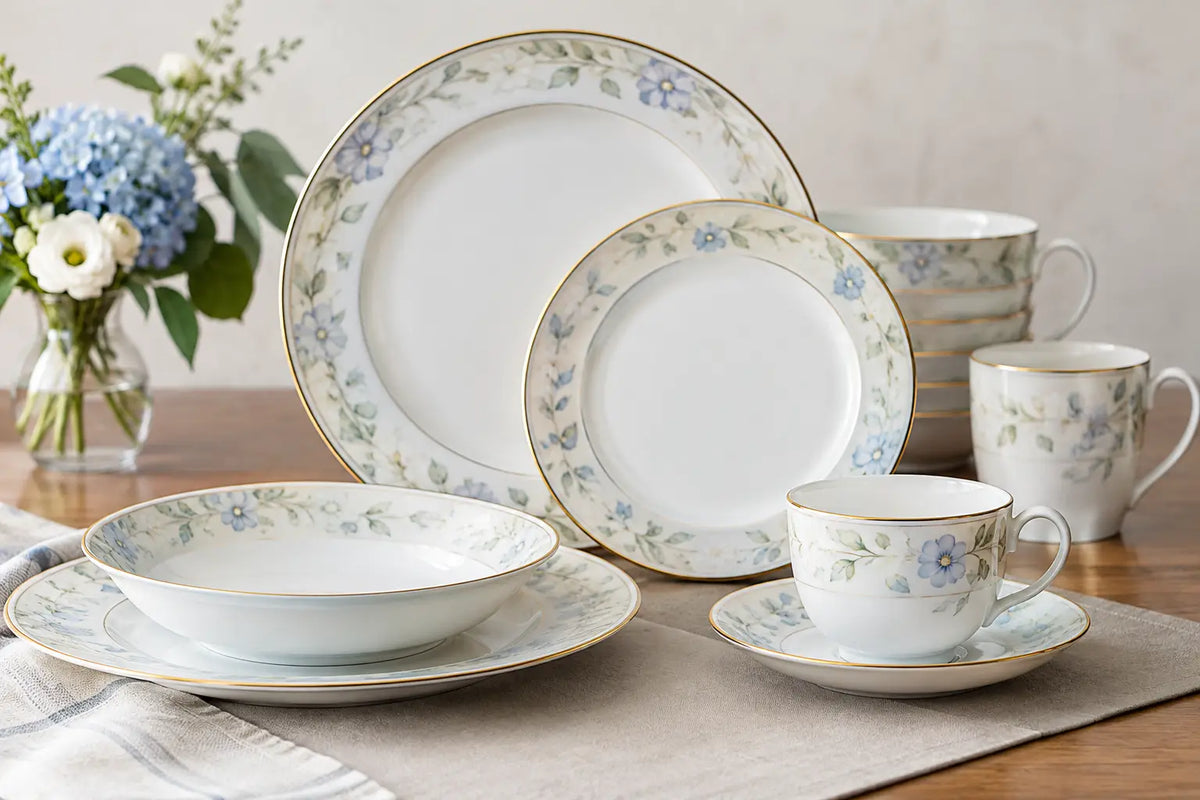
A dinnerware pattern does more than fill a cabinet. It sets the mood for a holiday meal, gives a wedding gift lasting meaning, and makes an ordinary dinner feel considered. This guide to Noritake patterns helps you choose a collection with the right balance of beauty, practicality, and occasion-ready appeal.
Noritake has earned its place on formal tables and in family homes because its designs span generations. Some patterns lean traditional, with delicate florals, gold or platinum borders, and graceful silhouettes. Others bring a cleaner, more contemporary look through white porcelain, subtle texture, or modern bands of color. The best choice is not simply the most elaborate pattern. It is the one you will be pleased to set, serve from, and enjoy for years.
Why Noritake Patterns Remain a Tableware Classic
Noritake dinnerware is often chosen for the same reason people invest in fine crystal or quality flatware: it makes celebrations feel complete. A coordinated place setting gives weddings, anniversaries, family gatherings, and seasonal dinners an extra sense of care. At the same time, many Noritake collections are designed to work beyond formal entertaining, making them suitable for regular meals when you want everyday dining to feel a little more polished.
The range of styles is a major advantage. You may prefer a timeless white pattern that pairs easily with colored linens and seasonal centerpieces, or a richly decorated collection that becomes the focal point of the table. Noritake also offers patterns in bone china, porcelain, and stoneware-style looks, so the final decision should account for both the appearance you love and the way your household dines.
For a newly married couple, a classic pattern can become the foundation of a first formal table. For an established home, replacement pieces or additional serving items can renew a beloved set without changing its character. For gift buyers, a beautiful Noritake serving bowl, platter, or cup-and-saucer set offers an elegant present with a clear purpose.
A Guide to Noritake Patterns by Style
The easiest way to narrow your choices is to begin with the atmosphere you want to create. Think about the table at its best: the meals you host, the colors in your dining space, and whether your collection needs to move comfortably from weekday use to special occasions.
Traditional floral and ornate border patterns
Floral patterns are a natural fit for those who enjoy classic entertaining. Soft blossoms, detailed vines, scalloped edges, and metallic trim bring a romantic, gracious feel to the table. These designs pair especially well with antique-inspired silverware, crystal stemware, and formal linens.
A pattern with gold accents feels warm and celebratory, making it particularly appealing for holiday dinners, wedding registries, and anniversary gifts. Platinum accents tend to look cooler and more tailored, pairing beautifully with clear crystal and contemporary décor. Both are refined choices, but metallic detailing can affect microwave use and may call for more careful cleaning. Always follow the care guidance for the specific collection.
White and softly textured patterns
White dinnerware is never plain when the shape and finish are thoughtfully designed. Embossed rims, raised textures, beaded borders, and subtle relief patterns add dimension without competing with food or table décor. This is a smart direction for hosts who want a versatile collection that works with nearly any season.
White Noritake patterns also make it easier to expand your table over time. You can mix in serving pieces, layer with patterned salad plates, or change the look with napkins and chargers. For couples building their first dinnerware collection, this flexibility is often more valuable than a highly specific motif.
Contemporary banded and geometric designs
For a dining room with cleaner lines, look for patterns with narrow bands, architectural rims, restrained color, or geometric details. These collections feel polished without becoming overly formal. They suit modern homes, condominium dining spaces, and hosts who prefer a refined look that does not require a full traditional table setting.
A dark rim can create striking contrast against white porcelain, while a soft gray, taupe, or blue accent offers an understated update. The trade-off is that bold bands can be more style-specific than all-white dinnerware. If you enjoy changing décor frequently, select a band color that already appears in your home rather than a passing trend.
Everyday patterns with special-occasion potential
Many shoppers want one collection that can handle both family dinners and festive entertaining. In that case, focus on practical shapes, dishwasher-friendly care where available, and a design that feels elevated without being fragile-looking. A simple border, neutral palette, or lightly textured finish provides enough distinction for company while remaining easy to live with.
This category is especially useful when purchasing a larger service for eight or twelve. You want enough pieces for guests, but you also want to feel comfortable reaching for them on a Tuesday night. Fine dinnerware should be enjoyed, not kept out of sight until an occasion feels important enough.
Choose a Pattern for How You Actually Entertain
Before choosing a pattern, consider what you serve and how you host. If your gatherings often include multi-course meals, look beyond the dinner plate. A complete assortment may include salad plates, bowls, cups, saucers, serving platters, vegetable bowls, gravy pieces, and accent plates. Matching serveware gives a hosted meal a more finished presentation than dinner plates alone.
For casual meals, rimless coupe shapes can feel current and are often easy to stack. For formal entertaining, a broad rim creates an elegant frame around the food and offers a natural place for decorative detailing. Teacups and saucers are worth considering if coffee, tea, dessert, or bridal showers are part of your entertaining style.
Size matters as well. Generously sized dinner plates accommodate contemporary portions and layered place settings, while smaller plates may suit traditional tables or compact storage. If cabinet space is limited, a versatile open-stock approach can be more sensible than purchasing every coordinating item immediately.
How to Match Noritake Dinnerware With Your Home
Your pattern should complement the room without disappearing into it. In a formal dining room with dark wood, traditional florals and gold accents can create a rich, welcoming table. In an airy kitchen or open-plan home, white porcelain or a subtle gray border keeps the setting fresh and adaptable.
Consider your existing pieces before committing. Clear stemware works with almost any pattern. Gold-rimmed china usually looks best with warm metallic flatware, while platinum or cooler gray details pair naturally with polished stainless steel or silver-toned serving pieces. You do not need every element to match exactly. A well-set table often looks more personal when materials and textures are thoughtfully balanced.
For holiday entertaining, build around the dinnerware rather than covering it. A floral or ornate pattern needs only simple linens and a low centerpiece. A white collection gives you more freedom to introduce rich seasonal color, greenery, or patterned napkins. Let the plates remain visible enough to do their part.
Buying Replacement Pieces and Expanding a Set
A discontinued pattern can still be meaningful, especially when it carries family memories or matches pieces already in use. Start by checking the backstamp on the underside of a plate, cup, or bowl. The mark may identify Noritake and provide useful clues about the collection, country of origin, or production era. Pattern names are more reliable than general descriptions, since similar floral designs can vary in border detail, shape, and color.
When adding to an existing set, compare more than the main motif. Look closely at the rim width, the placement of metallic trim, the cup shape, and the tone of the white body. Older and newer production runs may show slight variations. If an exact match is unavailable, consider adding complementary serving pieces in a neutral white pattern rather than forcing a near-match into a formal place setting.
If you are starting fresh, prioritize the pieces you use most. Begin with dinner plates, salad plates, bowls, and mugs or cups. Add serving pieces as your entertaining needs grow. This approach makes a quality collection feel attainable while leaving room for wedding, anniversary, or housewarming gifts that carry the pattern forward.
Care That Preserves the Pattern
Fine dinnerware rewards a little attention. Avoid sudden temperature changes, which can stress porcelain or china. Stack plates with soft separators if storage is tight, particularly when rims have metallic decoration. For hand washing, use a mild detergent and a soft cloth rather than abrasive scrubbers.
Microwave and dishwasher suitability depends on the individual Noritake pattern, not the brand name alone. Metallic trim generally means a piece should not go in the microwave, and hand washing is often the safest choice for preserving detailed decoration over time. For dishwasher-safe collections, avoid overcrowding and choose a gentle cycle whenever possible.
A Noritake pattern should feel like an invitation to gather. Choose one that suits the celebrations ahead, then give it a place in your everyday life - because a beautifully set table is often the simplest way to make people feel welcome.