
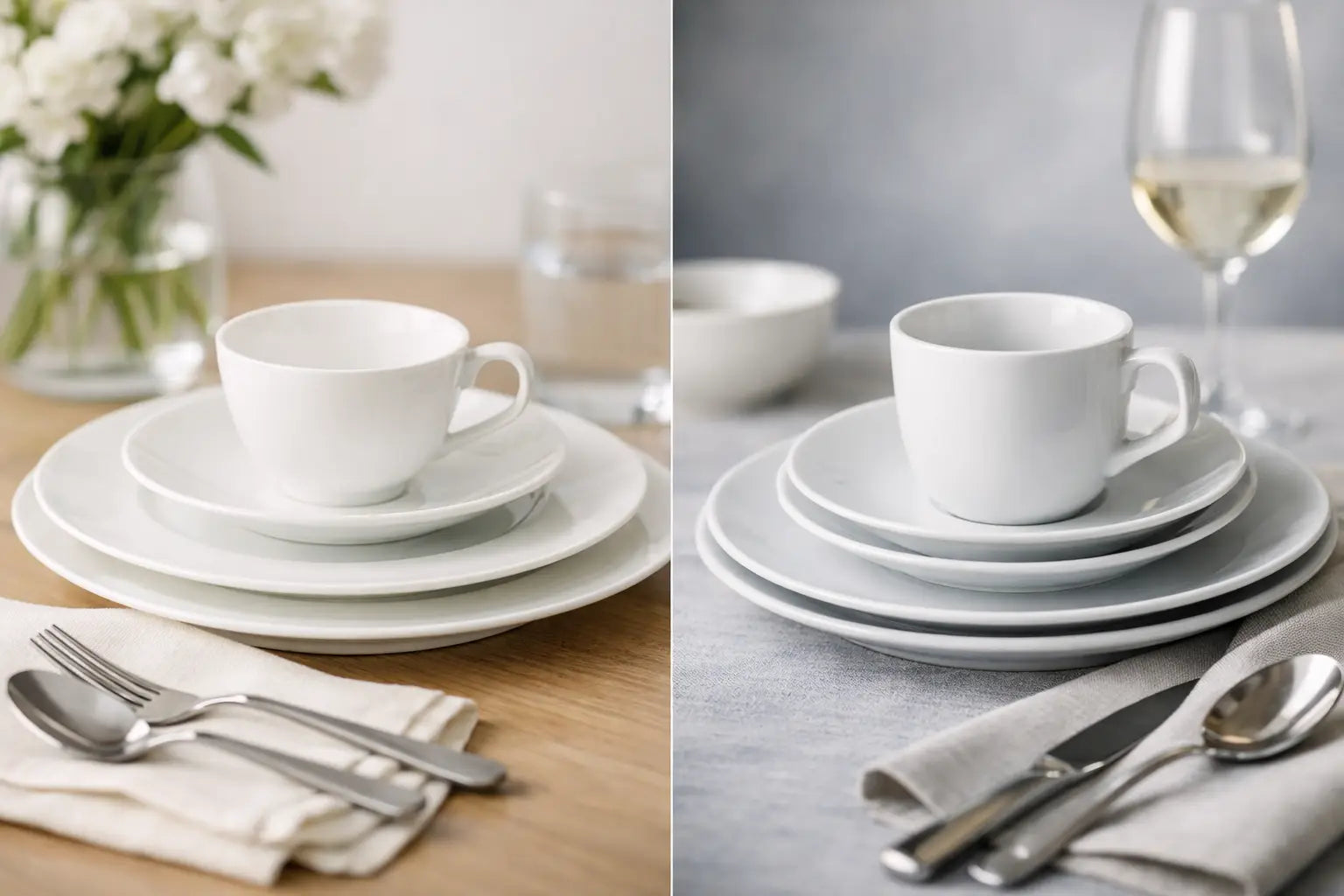
A beautifully set table can feel completely different in the hand depending on the dinnerware you choose. In the bone china vs porcelain decision, both materials offer refined looks, lasting quality, and a place at celebrations, but they are not interchangeable. The right choice depends on whether you are building a wedding registry, replacing everyday dishes, hosting holiday dinners, or selecting a gift with real staying power.
Bone China vs Porcelain: The Essential Difference
Both bone china and porcelain are types of ceramic dinnerware made from fine clay and fired at high temperatures. Porcelain is traditionally made from kaolin clay, feldspar, and quartz. Bone china includes those ingredients plus bone ash, usually derived from animal bone and processed into a fine powder.
That added bone ash gives bone china its signature qualities: a warm ivory tone, a softly translucent appearance, and remarkable strength for its delicate weight. Hold a fine bone china plate up to the light and you may notice a gentle glow around the thinner areas. It is one of the details that makes it especially appealing for formal place settings, afternoon tea, and heirloom-worthy gifting.
Porcelain is typically whiter, more opaque, and often slightly heavier than bone china. It can range from crisp, minimalist dinnerware to richly decorated patterns with gold accents, florals, or intricate borders. Not all porcelain is the same, either. High-fired porcelain from established makers can be exceptionally durable and elegant, while lower-quality porcelain may be more prone to chipping or feel less refined.
Appearance: Warm Tradition or Clean White Style?
Your table's overall look is often the easiest way to choose between the two. Bone china has a creamy, luminous character that suits traditional entertaining particularly well. It complements floral patterns, delicate metallic detailing, and classic styles associated with heritage dining collections. For bridal showers, anniversary dinners, and holiday tables, its warmth can make even a simple setting feel more considered.
Porcelain offers a broader visual range. A bright white porcelain dinnerware set can create a tailored, contemporary foundation for everyday meals, then transition easily to a more formal occasion with crystal stemware, polished flatware, and a beautiful centerpiece. Patterned porcelain can be equally formal, especially when paired with coordinating serving pieces.
There is no universal rule that bone china is more elegant than porcelain. A thoughtfully designed porcelain set from a respected brand may feel every bit as special as bone china. The better question is whether you prefer a soft, classic glow or a cleaner, often brighter presentation.
Is Bone China Stronger Than Porcelain?
Despite its delicate appearance, bone china is known for an excellent strength-to-weight ratio. The bone ash helps create a dense, vitrified body that resists chipping better than many people expect. This is why fine bone china can be practical for frequent use, not just reserved for a cabinet until a major holiday.
Porcelain is also highly durable, especially when it is high-fired and fully vitrified. Its sturdiness makes it a popular choice for busy households, casual entertaining, and serving pieces that see regular use. A porcelain platter or large serving bowl often provides a reassuringly solid feel for family-style meals.
Still, durability is not a promise that either material is unbreakable. Thin rims, sculpted handles, and ornate shapes require more care. A plate can chip if it strikes a stone countertop, and stacked dishes can scratch if grit is trapped between them. Brand quality, glaze, thickness, and how the pieces are used matter as much as the material itself.
The practical takeaway
Choose bone china when you want a lighter piece with refined translucency and dependable everyday strength. Choose porcelain when you prefer a substantial feel, bright white color, or a broader selection of shapes and decorative styles. For a home with young children or frequent casual gatherings, a well-made porcelain set may feel more relaxed. For someone who loves setting a polished table, bone china offers a graceful upgrade without being overly fragile.
Everyday Use, Dishwasher Care, and the Microwave
Many modern bone china and porcelain collections are dishwasher safe, making them suitable for real life rather than occasional display. However, care instructions should always be checked for the specific pattern. Metallic bands, gold trim, platinum accents, and hand-painted decorations can change what is safe for the dishwasher or microwave.
Plain white porcelain and undecorated bone china are often microwave safe, but metallic detailing should never go into a microwave. Even dishwasher-safe fine dinnerware benefits from a gentle cycle, mild detergent, and enough spacing to prevent pieces from knocking together. Avoid sudden temperature changes, such as placing a cold plate into a very hot oven or rinsing a hot serving bowl under cold water.
If you are choosing a set for daily family use, consider purchasing a few extra dinner plates, salad plates, and mugs at the start. Replacements can become harder to find when patterns are discontinued. This is particularly useful for couples building a first complete table setting or families investing in a pattern they plan to enjoy for years.
Which Material Is Better for Gifts?
For wedding, anniversary, housewarming, or milestone gifts, both materials make an impressive choice because they combine usefulness with lasting beauty. Bone china is especially fitting when the recipient appreciates tradition, tea service, formal dining, or collectible heritage patterns. A set of teacups, a cake stand, or a place setting can become part of the recipient's entertaining rituals for decades.
Porcelain is a confident gift for someone with a more modern home, a growing family, or a preference for versatile tableware. Dinnerware, serving bowls, gravy boats, and platters in porcelain are easy to integrate into a wide range of interiors and occasions.
Consider the recipient's lifestyle before choosing a pattern. A couple who hosts formal dinners may enjoy an ornate border and coordinating serving pieces. Someone who prefers a simple, open kitchen may value clean white porcelain that works with every season. A gift becomes more meaningful when it suits the way it will actually be used.
Value: What Are You Paying For?
Bone china often carries a higher price because of its composition, manufacturing process, translucent finish, and association with premium dinnerware traditions. That does not mean every expensive piece is automatically better, nor does it mean porcelain is a lesser choice. Design, craftsmanship, brand reputation, country of origin, and decorative techniques all influence price.
A quality dinnerware purchase is best viewed over years of meals, celebrations, and family gatherings. A well-chosen set can move from weekday breakfasts to Thanksgiving dinner with only a change of linens and glassware. This versatility makes established collections especially appealing for registries and gift giving.
At Royal Gift, shoppers can compare recognized dinnerware brands and coordinate place settings with serveware, crystal, flatware, and gift-ready pieces. Seeing the whole table together helps make the choice feel less like a material comparison and more like a personal entertaining style.
Questions to Ask Before You Choose
Before committing to bone china or porcelain, think beyond the first impression. Ask whether the set will be used daily or mostly for company, whether you need microwave-safe pieces, and whether you want to expand the collection later. Also consider storage. Larger porcelain pieces may take up more cabinet space, while lightweight bone china can be easier to carry and stack carefully.
If you are torn, there is room for both. Many homes use porcelain dinnerware for everyday meals and bring out bone china for formal entertaining, tea, and special occasions. Others choose one versatile pattern and enjoy it every day, which is often the best way to make fine dinnerware part of family life rather than something saved for someday.
Choose the material that makes you want to set the table well, whether dinner is a quiet Tuesday meal or a celebration with everyone gathered close.