
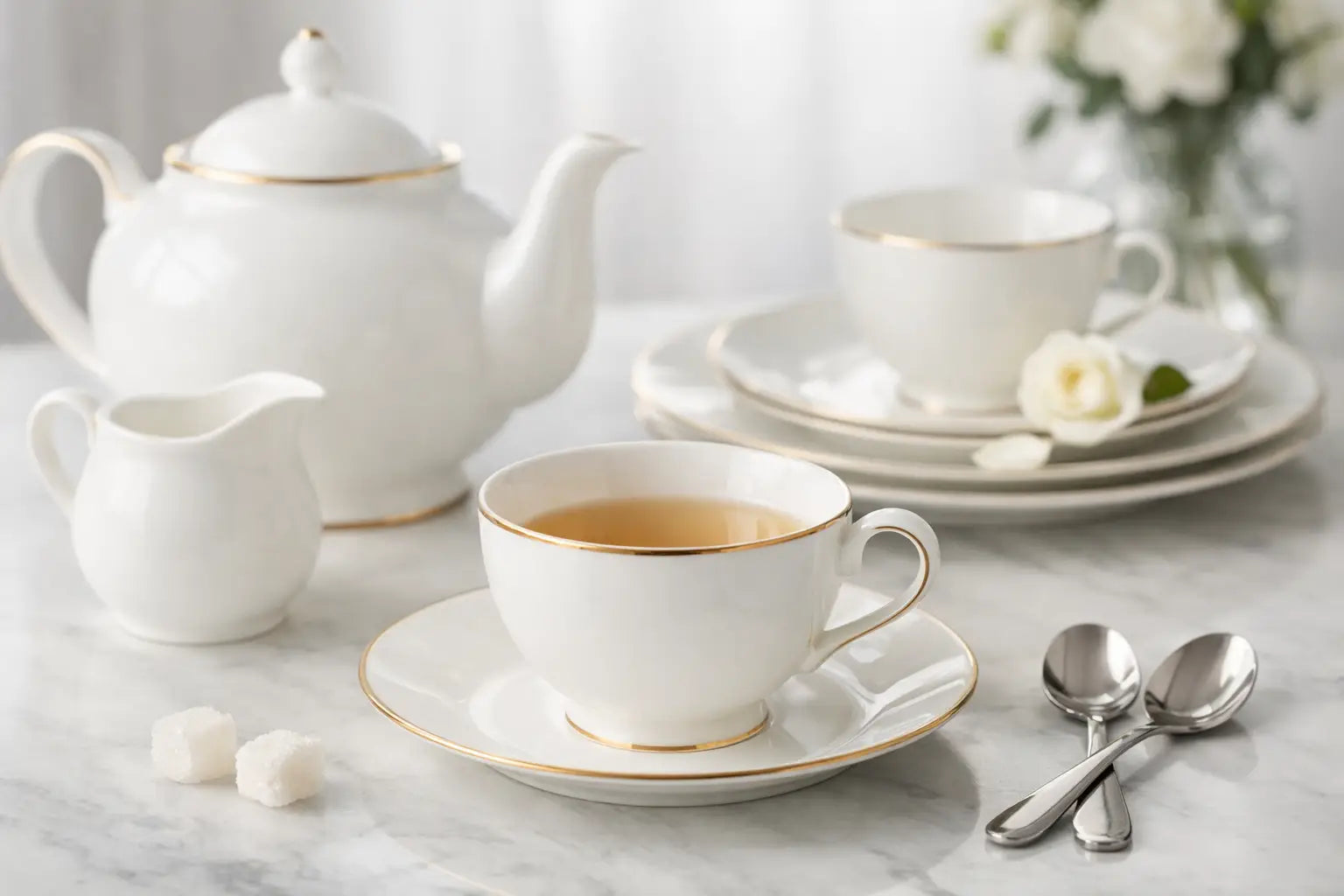
A table set with bone china has a presence that is difficult to imitate: a gently luminous surface, a delicate-looking rim, and enough refinement to make even a simple brunch feel considered. But what is bone china, exactly? It is a premium type of ceramic dinnerware made with bone ash, clay, and mineral materials, then fired at very high temperatures. The result is dinnerware prized for its pale ivory warmth, translucency, and surprising strength.
For wedding registries, anniversary gifts, holiday entertaining, and a first formal table setting, bone china remains one of the most enduring choices. It carries tradition without requiring a table to feel overly formal, especially when paired with clean glassware, polished flatware, and a simple centerpiece.
What Is Bone China Made Of?
The defining ingredient in bone china is bone ash, traditionally derived from cattle bone and processed into a fine, purified powder. This material is blended with kaolin clay, feldspar, and other minerals to create a workable ceramic body. While exact formulas vary by manufacturer, genuine bone china generally contains a meaningful proportion of bone ash, often around 30% or more.
Bone ash does more than give the material its name. It contributes to bone china's distinctive creamy tone and helps create its famous translucency. Hold a fine bone china cup or plate toward a light source and, depending on its thickness and decoration, you may see a soft glow through the body of the piece.
After shaping, the pieces are fired at extremely high temperatures, often more than once. That process creates a dense, vitrified surface with very low porosity. The final dinnerware may be finished with a clear glaze, patterned decoration, metallic trim, or hand-applied details.
The material is not the same as porcelain, although the two are closely related. Bone china belongs to the porcelain family, but its particular composition gives it a warmer look and a more delicate visual quality than many traditional hard porcelains.
Why Bone China Feels So Special
Bone china is often associated with afternoon tea, formal entertaining, and heritage tableware, but its appeal is practical as well as visual. Fine pieces feel light in the hand, sit beautifully on the table, and can stand up well to regular use when cared for properly.
Its most recognizable qualities are translucency, lightness, strength, and a smooth finish. A bone china dinner plate can appear slim and refined without feeling fragile. That contrast is part of its charm: it looks elegant enough for a celebration yet may be suitable for everyday dining.
The creamy white body also creates an especially flattering backdrop for food. Fresh fruit, colorful salads, roast dinners, and desserts all stand out against the soft ivory surface. For hosts building a coordinated collection, bone china pairs naturally with crystal stemware, silver-tone or stainless flatware, and both classic and contemporary linens.
Design makes a significant difference. A crisp white coupe plate brings a clean, modern mood, while floral borders, raised embossing, and gold accents offer a more traditional expression. The same material can suit a minimalist condo dining room, a formal family holiday, or a bridal shower set with tiered serving pieces.
Bone China vs. Porcelain vs. Stoneware
Choosing dinnerware becomes easier when the materials are compared side by side. Bone china and porcelain are both refined ceramics, while stoneware is generally more casual and heavier.
Bone China
Bone china is known for its ivory cast, delicate profile, translucency, and excellent durability for its weight. It is a classic choice for formal place settings, teacups and saucers, serving platters, and gift-worthy dinnerware sets. It is often more expensive than basic porcelain because of its materials, manufacturing, and reputation for refinement.
Porcelain
Porcelain is typically made from kaolin clay and mineral ingredients without bone ash. It is fired at high temperatures and can also be strong, nonporous, and suitable for daily use. Its color often reads as a cooler, brighter white than bone china. Porcelain is an excellent choice for shoppers who prefer a crisp look or want a broad range of patterns and price points.
Stoneware
Stoneware usually has a thicker, more substantial feel. It is popular for relaxed everyday tables, often with earthy glazes, handmade-inspired shapes, and casual dinnerware sets. Quality stoneware can be durable, but it does not offer the translucency or fine lightness of bone china.
There is no single best material for every home. A household that hosts elegant holiday dinners may appreciate bone china, while a busy family may choose porcelain for daily meals and reserve a more decorative bone china pattern for celebrations. Some shoppers enjoy owning both: a versatile white set for frequent use and a patterned set for special occasions.
Is Bone China Durable Enough for Everyday Use?
Yes, many bone china collections are durable enough for everyday meals. Its fine appearance can be misleading. Because it is fired to a dense, hard finish, quality bone china can resist chipping better than people expect.
Still, durability depends on the individual pattern and how it is used. A simple glazed white collection may be dishwasher and microwave safe, while a plate with a gold or platinum rim often requires more careful treatment. Metallic accents can react poorly to microwave use, and repeated dishwasher cycles may gradually dull detailed decoration or precious-metal trim.
Before purchasing or washing a set, check the manufacturer's care instructions. Those details matter more than the material name alone. If a collection is intended for frequent use, look for dishwasher-safe pieces and consider buying a few extra settings or replacement plates when available. This is especially helpful for a favorite pattern you expect to use over many years.
How to Recognize Quality Bone China
A reputable maker and a clear material description are strong starting points. Established dinnerware brands often provide collection-specific care guidance, country of origin information, and details about whether an item is bone china, porcelain, or another ceramic.
When viewing a piece in person, look at its finish. Quality bone china should feel smooth and balanced, with a clean glaze and neatly applied pattern. Set a plate on a flat surface to make sure it does not rock. On cups, check that the handle feels comfortable and securely attached. On decorated pieces, inspect borders and motifs for crisp placement.
Translucency can be a useful clue, but it is not the only measure of quality. A heavier plate may show less light than a thin teacup, and richly decorated patterns can obscure the effect. Focus instead on the overall standard of the piece: material, finish, shape, decoration, and the confidence you have in the manufacturer.
For gifting, a complete place setting or a coordinated tea service makes a lasting impression. A single bone china serving bowl, cake stand, or pair of teacups can also be meaningful for an engagement, housewarming, Mother's Day, or milestone anniversary. The best choice reflects how the recipient entertains and the styles they already enjoy at home.
Caring for Bone China
Thoughtful care helps preserve bone china's finish for decades. Even when a collection is listed as dishwasher safe, avoid overcrowding the dishwasher. Plates and cups should not knock together during the cycle, since contact is a common cause of chips. Use a gentle detergent and allow pieces to cool before handling.
For hand washing, use warm water, a soft sponge, and mild dish soap. Avoid abrasive scouring pads, which can scratch the glaze or wear decorative details over time. Never expose a hot plate or cup to a sudden temperature change, such as placing it directly into cold water. Thermal shock can cause cracking in any ceramic dinnerware.
Store plates vertically in a rack when possible, or place soft felt separators between stacked pieces. Cups should be stored upright rather than hanging by their handles. If your set includes gold or platinum detailing, hand washing is usually the safest choice unless the manufacturer specifically states otherwise.
Choosing Bone China for Your Table
Start with how you plan to use it. For everyday elegance, a white or subtly textured bone china collection gives you flexibility across seasons and occasions. It can be dressed up with formal chargers and crystal or kept relaxed with linen napkins and fresh flowers.
For a more traditional table, consider florals, scalloped edges, banded rims, or classic motifs. These designs bring ceremony to holiday dinners, showers, and family celebrations. If you are registering for dinnerware or giving a set as a wedding gift, choose a pattern with practical companion pieces such as salad plates, mugs or teacups, serving platters, and bowls.
Bone china is not simply dinnerware to save for one annual occasion. A well-chosen piece invites you to make ordinary meals feel more gracious, whether you are serving coffee to a friend or setting the table for the people you love.