
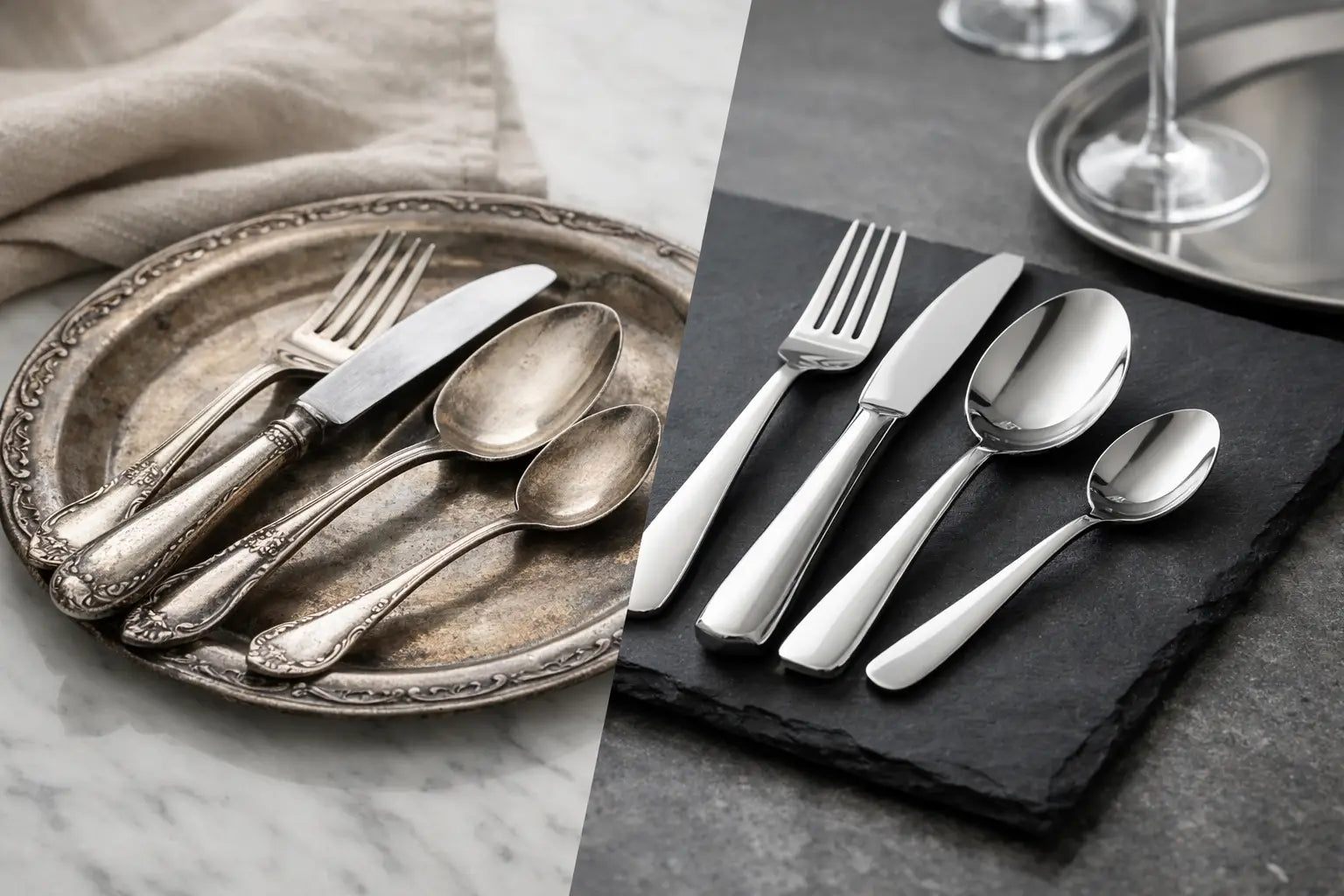
A beautifully set table is often remembered long after the meal, and flatware plays a larger role than many hosts expect. When choosing silverplate vs stainless flatware, the right answer depends on how you entertain, how much care you welcome, and whether you want a polished heirloom look or effortless everyday performance.
Silverplate brings unmistakable ceremony to a formal dining table. Stainless steel offers practical elegance for the meals, gatherings, and celebrations that happen often. Both can be exceptional choices, but they serve different homes and different moments.
Silverplate vs Stainless Flatware at a Glance
Silverplate is made by applying a layer of silver over a base metal, commonly brass, nickel silver, or another alloy. Its appeal is immediate: a warm, luminous finish that reflects candlelight beautifully and complements traditional dinnerware, crystal stemware, and formal serveware. It has long been associated with wedding gifts, holiday tables, and family entertaining.
Stainless flatware is made from steel alloys designed to resist corrosion and staining. Quality sets are often described as 18/10 or 18/8, referring to the percentages of chromium and nickel in the steel. Chromium supports rust resistance, while nickel contributes to shine and durability. A well-made stainless pattern can look refined enough for a dinner party while still being ready for a weekday breakfast.
The main distinction is not simply appearance. Silverplate asks for more attentive care in exchange for a traditional finish with special-occasion presence. Stainless steel is the dependable choice for households that want lasting shine with minimal maintenance.
Choose Silverplate for Formal Tradition
Silverplate is a natural fit for hosts who enjoy setting a complete table and marking occasions with a sense of ceremony. It pairs especially well with white china, patterned dinnerware, crystal, linen napkins, and classic centerpieces. The surface has a softer glow than stainless steel, giving place settings a gracious, collected appearance.
For weddings, milestone anniversaries, housewarmings, and holiday celebrations, a silverplate flatware set can feel deeply personal. It is not only useful but also symbolic: an invitation to gather, celebrate, and create traditions at the table. A classic pattern may remain relevant for decades, even as dinnerware and décor evolve around it.
Silverplate also has a pleasing weight and balance when it is well crafted. Guests notice the difference when they lift a substantial fork or spoon. That tactile quality can make a formal meal feel more considered without becoming overly ornate.
There are practical considerations. Silverplate can tarnish when exposed to air, moisture, sulfur-containing foods, and certain storage materials. Tarnish does not mean the piece is damaged, but it does mean occasional polishing is part of ownership. Over many years, frequent abrasive polishing or heavy use can wear through the plated layer, particularly on high-contact areas such as fork tines and spoon bowls.
For this reason, silverplate is often best reserved for entertaining or used by households that genuinely enjoy its care ritual. If polishing a cherished set before a holiday meal sounds satisfying rather than burdensome, silverplate may be exactly right.
Caring for Silverplate
Hand washing and drying promptly are the safest habits for silverplate. Use a mild dish soap, a soft cloth, and warm water rather than harsh scouring products. Avoid leaving pieces in standing water or in contact with foods such as eggs, mayonnaise, and mustard for extended periods, as these can encourage tarnish.
When polishing is needed, choose a polish made for silver and use it sparingly. Store clean, dry flatware in a lined chest, drawer organizer, or soft protective roll. Keeping pieces separated reduces scratching and helps preserve that elegant finish between occasions.
Choose Stainless Flatware for Everyday Ease
Stainless flatware is a practical investment for busy homes, frequent entertainers, and anyone furnishing a first home or completing a wedding registry. It can move easily from casual family dinners to a polished brunch or holiday buffet. With the right pattern, stainless has a clean, elevated look that does not require a formal setting to feel special.
For the best long-term performance, look for 18/10 stainless steel whenever possible. This composition is prized for its bright finish, comfortable weight, and resistance to rust and corrosion. It is especially suited to sets that will be used daily and washed often.
Stainless steel is generally dishwasher safe, which makes it a clear favorite for households that value convenience. Still, quality care matters. Rinsing away acidic or salty food residue, avoiding harsh detergents when possible, and drying pieces soon after the cycle can help prevent water spots and preserve a brilliant finish.
The finish of stainless can vary widely. A mirror polish is bright and formal, while a satin or brushed finish feels contemporary and is more forgiving of fingerprints. Handle design matters too. Slim, sculpted profiles suit a more traditional table, while clean-lined handles complement modern dinnerware and minimalist settings.
Stainless does not have the same warm tone or historic association as silverplate, but it can still look exceptionally elegant. For many families, its ability to work beautifully every day is its greatest luxury.
Cost, Longevity, and Value
Silverplate and stainless flatware should be evaluated differently because their value comes from different strengths. Silverplate often carries a higher upfront cost, especially in detailed patterns or gift-ready boxed sets. Its value is closely connected to craftsmanship, presentation, tradition, and the pleasure of owning something made for meaningful occasions.
Stainless flatware offers strong long-term value through durability and low maintenance. A quality 18/10 set can serve a household for years with little more than ordinary washing. It is generally the more economical choice for large place settings, growing families, and homes that need extra pieces on hand for guests.
If you are comparing sets at a similar price point, examine more than the number of pieces. Consider the weight in your hand, the smoothness of the edges, the finish quality, and whether the set includes the serving pieces you use most. A beautiful five-piece place setting is useful, but a coordinating serving spoon, butter knife, slotted spoon, or cake server may make a collection far more practical for entertaining.
What Works Best for Weddings and Gifts?
For a wedding or anniversary gift, silverplate has lasting emotional appeal. It feels ceremonial from the moment it is unwrapped, particularly when selected in a classic pattern that suits formal dinnerware. It is an especially thoughtful choice for couples who enjoy hosting holidays, building a traditional home, or collecting pieces they can bring out for important family occasions.
Stainless flatware is often the wiser gift for couples who want one beautiful set they can use immediately and often. It is ideal for newlyweds furnishing a kitchen, first-time homeowners, and anyone who appreciates refined design without additional upkeep. A premium stainless set can be both a practical daily essential and a polished part of the table for years to come.
For a truly considered gift, think about the recipient's lifestyle rather than choosing based on formality alone. The couple who hosts elaborate holiday dinners may treasure silverplate. The couple balancing work, young children, and weekend gatherings may appreciate stainless far more.
How to Build a Table You Will Love Using
The best flatware should feel appropriate in your hand and natural on your table. If you own formal china, crystal, and silver-toned serveware, silverplate can bring the entire setting together with classic confidence. If your table changes from takeout on Tuesday to a birthday dinner on Saturday, stainless provides flexibility without compromising presentation.
Some homes benefit from both. A versatile stainless set can cover everyday meals and larger casual gatherings, while a silverplate collection becomes part of holiday traditions, anniversaries, and elegant dinners. This approach lets each material do what it does best.
Whether you choose a gleaming silverplate pattern or enduring stainless steel, select pieces that invite you to set the table more often. The most memorable flatware is not the set kept hidden away, but the one that helps turn an ordinary meal into an occasion worth sharing.