
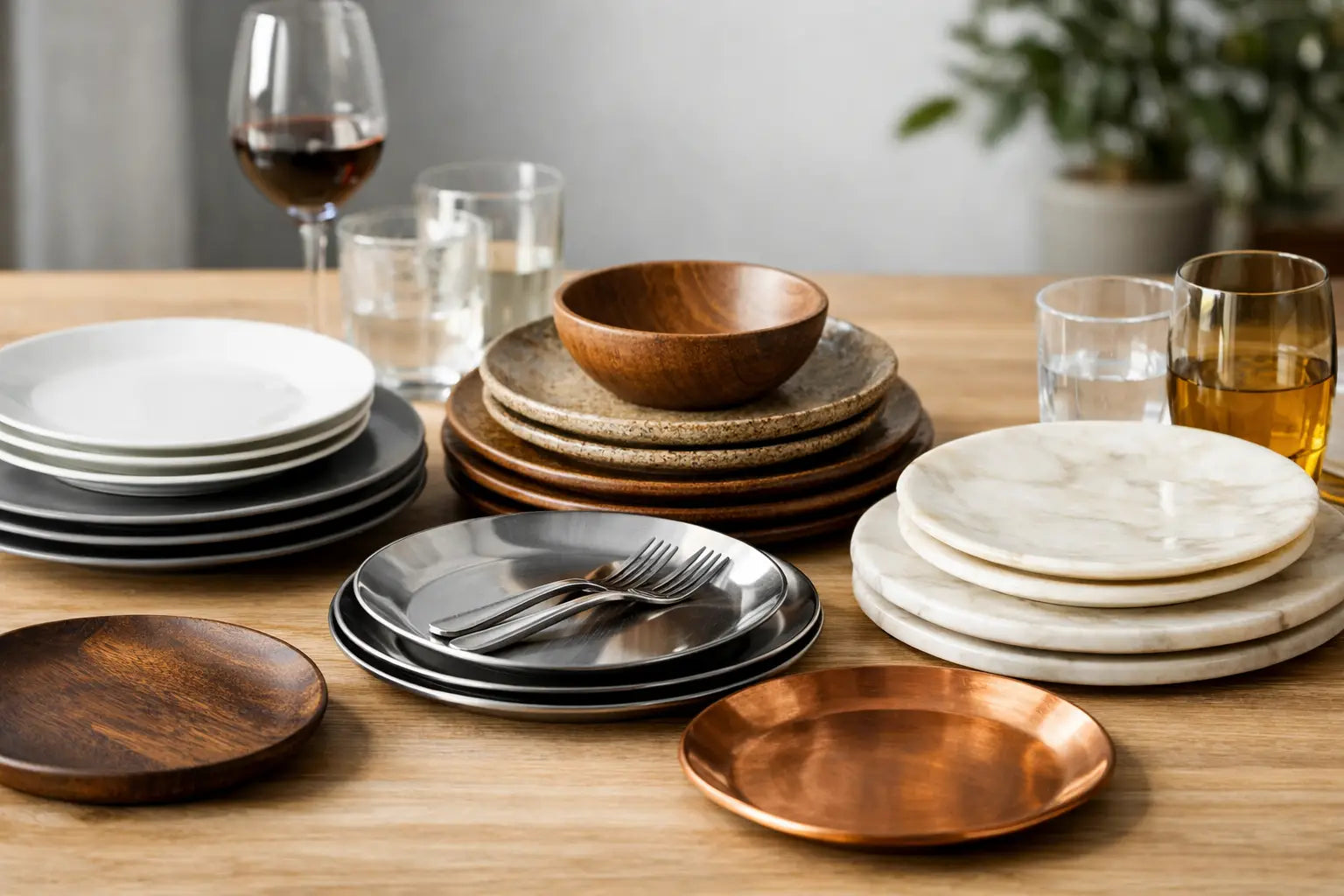
A beautifully set table begins long before the centerpiece or the first course. The weight of a dinner plate, the glow of a porcelain rim, and the confidence that a piece can handle a busy family meal all shape the experience. Knowing how to choose dinnerware material helps you select pieces that feel right for your home, your entertaining style, and the celebrations you want to remember.
The best material is rarely the most expensive or the most casual option in isolation. It is the one that suits how you live. A couple building a wedding registry may want a refined set that can grow with years of hosting, while a family may prioritize durability for weekday dinners without giving up an elegant table. Start with the role your dinnerware needs to play, then consider the qualities of each material.
Start With the Way You Dine
Before comparing finishes and patterns, think about how often the dishes will be used. Dinnerware for daily breakfasts, school-night suppers, and dishwasher cycles needs a different level of practicality than a set reserved for holiday dinners and anniversary celebrations.
If you entertain often, consider whether you want one versatile collection or separate everyday and formal settings. A durable porcelain or stoneware set can serve daily meals beautifully, while bone china or fine china can bring a more ceremonial touch to a formal table. There is no rule requiring your best dinnerware to remain in a cabinet. Many hosts enjoy using elegant pieces more often, especially when they choose a material that fits their care routine.
Also consider your storage. Large sets with chargers, serving pieces, and multiple place settings need adequate cabinet space. If your home is compact, a streamlined set in a neutral pattern can be easier to store, coordinate, and expand over time.
How to Choose Dinnerware Material by Type
Each dinnerware material brings its own balance of appearance, weight, durability, and care. Understanding those differences makes the decision far more satisfying.
Porcelain: polished and versatile
Porcelain is a classic choice for households that want a clean, elevated look with reliable everyday performance. Fired at high temperatures, it is nonporous, smooth, and generally more durable than its delicate appearance suggests. It can be crisp white, richly colored, patterned, or finished with a subtle texture.
This material works especially well for someone who wants a single collection that moves from weekday dinners to a dressed-up gathering. Many porcelain pieces are dishwasher-safe and microwave-safe, but decorative metallic accents can change those rules. Always check the individual product care guidance before placing patterned or gold-rimmed dinnerware in the microwave.
Bone china: light, luminous, and occasion-worthy
Bone china is valued for its remarkable combination of strength and refinement. It is typically thinner and lighter than porcelain, with a soft translucency that becomes noticeable when held to the light. The effect is graceful without being fragile, which is why bone china remains a favorite for wedding gifts, formal place settings, and heirloom collections.
Choose bone china when presentation matters as much as utility. It pairs beautifully with polished flatware, crystal stemware, and formal serveware, making it ideal for holidays, bridal showers, and milestone dinners. The trade-off is that it often requires more mindful handling, particularly if it features metallic detailing or an intricate decorative border.
Stoneware: warm, substantial, and relaxed
Stoneware has a more grounded character. Its slightly heavier feel and often handcrafted appearance make it well suited to relaxed gatherings, casual entertaining, and homes with a modern rustic or organic style. Glazes can range from glossy and polished to matte, speckled, or reactive, giving each setting visual depth.
For everyday use, stoneware is appealing because it feels substantial in the hand and presents hearty meals beautifully. However, not all stoneware is created equally. Some pieces may be more prone to chipping at the edges than porcelain, and reactive glazes can vary slightly from piece to piece. That variation is part of the charm, but it may not suit a host who wants every place setting to look identical.
Earthenware: expressive and decorative
Earthenware is generally fired at a lower temperature than porcelain or stoneware, giving it a softer, more artisanal quality. It is often chosen for its rich color, hand-painted decoration, and inviting character. A patterned earthenware collection can make a table feel immediately festive, whether you are serving a summer lunch or setting out desserts during the holidays.
Because earthenware can be more porous and less resistant to chips than other ceramic options, it is often best for lighter use or for households comfortable with a little extra care. Look for glazed pieces and follow manufacturer instructions closely. If you love an expressive, collected table, earthenware can be a wonderful accent collection alongside more durable everyday plates.
Melamine: practical for outdoor dining
Melamine is not ceramic, but it deserves consideration for certain settings. It is lightweight, highly break-resistant, and particularly useful for patios, poolside meals, picnics, and homes with young children. Today’s melamine designs can look surprisingly polished, including options that mimic ceramic finishes.
Its limitation is heat. Melamine should not be used in a microwave, and it is not the material for a formal indoor celebration where the weight and refinement of porcelain or china are part of the occasion. Think of it as a smart companion collection rather than a replacement for your primary dinnerware.
Match the Material to Your Table Style
Material influences more than durability. It changes the visual mood of the entire table. Porcelain in white or ivory creates a timeless foundation and allows linens, flowers, and food to take center stage. Bone china with a delicate border brings a traditional, celebratory feel that works beautifully with crystal and silver-toned flatware.
Stoneware offers a more relaxed sense of hospitality, especially in neutral glazes, deep blues, sage greens, or earthy tones. Earthenware can introduce pattern and color when you want the dinnerware itself to become part of the décor. If you are choosing a gift for newlyweds, it helps to consider their existing home style as well as their future entertaining plans.
A simple rule can guide the decision: choose a neutral, classic base when you enjoy changing your table with seasonal accents, and choose a patterned collection when you want the dishes to provide the personality. Both approaches can look elegant when the scale and color palette feel intentional.
Look Beyond the Dinner Plate
A dinnerware set should work as a complete collection, not just a stack of attractive plates. Consider the pieces you use most: salad plates, cereal bowls, pasta bowls, mugs, serving platters, and serving bowls. A wide-rimmed dinner plate may look formal and refined, but it can take up more room on a smaller table. Deep bowls may be more useful than shallow ones if your household regularly serves pasta, grain bowls, or soups.
For entertaining, the ability to add matching pieces later is valuable. Established collections often offer open-stock replacements and coordinating serveware, allowing you to build place settings gradually or replace an occasional broken piece without starting over. This is particularly helpful for wedding gifts and for hosts who want to expand from four settings to eight or twelve over time.
Consider Care Before You Commit
The most admired dinnerware is the dinnerware you are comfortable using. If convenience is essential, confirm dishwasher and microwave compatibility before you buy. Even within the same material category, care needs can differ based on glaze, metallic trim, and decorative techniques.
Hand washing may be worthwhile for a treasured formal collection, especially pieces with gold or platinum accents. For everyday dinnerware, dishwasher-safe porcelain or stoneware can make elegant living feel much easier. Avoid sudden temperature changes with ceramic pieces, and stack plates carefully with soft liners if you are storing fine china for extended periods.
At Royal Gift, a thoughtfully selected dinnerware collection can become part of every gathering, from the first meal in a new home to a holiday table filled with family. Choose the material that invites you to set the table more often, serve with confidence, and make even a simple dinner feel like an occasion.