
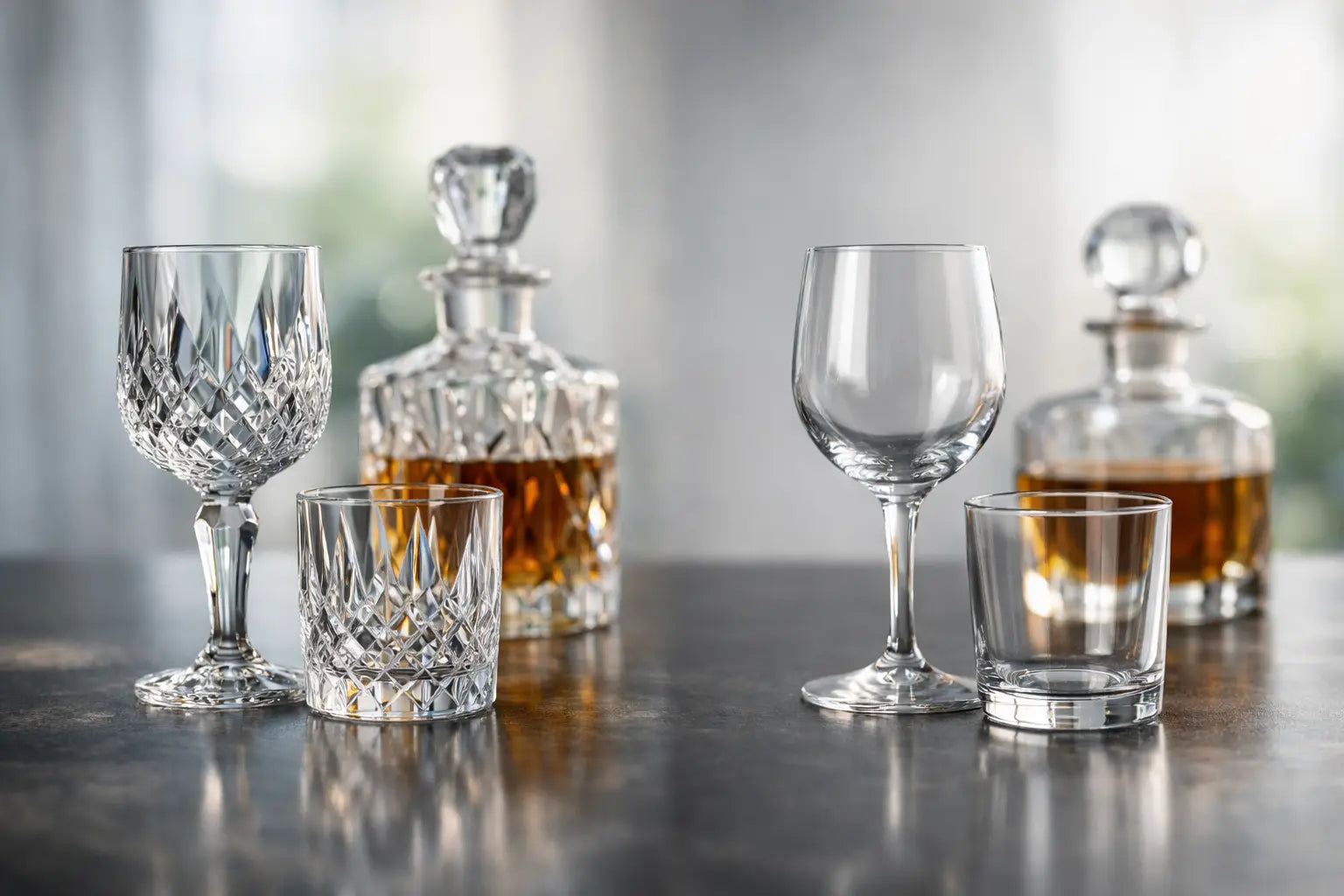
A champagne toast, a formal dinner, and a meaningful wedding gift all ask something different of drinkware. Understanding crystal vs glassware differences helps you choose pieces that look right on the table, feel special in the hand, and suit the way they will actually be used. The distinction is not simply about price. It comes down to material, craftsmanship, clarity, weight, durability, and the occasion you have in mind.
For everyday meals, well-made glassware can be a practical and beautiful choice. For milestone celebrations, a crystal decanter, set of flutes, or cut crystal bowl brings a level of light, detail, and ceremony that ordinary glass cannot quite duplicate. Both deserve a place in a thoughtfully appointed home.
Crystal vs Glassware Differences at a Glance
Glassware is generally made from a mixture of silica, soda ash, and lime, commonly called soda-lime glass. It is widely used for tumblers, wine glasses, pitchers, and casual serving pieces because it is accessible, versatile, and often more resistant to the demands of daily use.
Crystal is also glass, but it has a more refined composition. Traditional crystal includes lead oxide, while many contemporary crystal collections are lead-free and use minerals such as barium, zinc, or titanium oxide. These additions increase the material's refractive quality, allowing it to bend light more dramatically. That is why crystal often appears brighter and more luminous, especially when cut with faceted patterns.
The difference is easiest to see when a crystal piece is placed near a standard drinking glass. Crystal tends to have exceptional clarity, a crisp sparkle, and a more substantial feel. Fine glassware can also be very clear and elegant, but it usually offers a softer, less prism-like effect.
Brilliance, Clarity, and the Look of the Table
Crystal is prized for the way it catches candlelight, sunlight, and the glow of an evening dining room. Its higher refractive index creates a distinctive brilliance that complements formal place settings, polished flatware, and celebratory serveware. A cut crystal vase or bowl can become a decorative focal point even when it is not in use.
This visual quality also makes crystal a natural choice for gifts. A pair of champagne flutes for an engagement, a decanter for an anniversary, or a serving bowl for a housewarming carries a sense of occasion before it is even unwrapped. Heritage brands and carefully detailed patterns add another layer of meaning for recipients building a wedding registry or collecting pieces over time.
Glassware offers its own appeal. Clean, contemporary glass can make a table feel relaxed and polished without becoming overly formal. Clear stemless wine glasses, highballs, and water goblets work beautifully for weekday dining, patio entertaining, and larger gatherings where ease matters as much as presentation. Colored or textured glass also gives hosts more freedom to introduce personality and seasonal style.
Weight, Rim, and How Each Piece Feels
The feel of drinkware matters, particularly for wine, whiskey, and champagne. Crystal often has a pleasing weight in the bowl or base, paired with a finely made rim that can feel delicate on the lips. Because crystal can be worked with precision, many crystal wine glasses have elegant proportions and slender stems that elevate the experience of serving a favorite vintage.
That does not mean every crystal piece is heavy or every glass piece is thick. Modern manufacturing has created exceptionally thin, refined glassware, while some crystal tumblers are intentionally substantial. The better question is how the item is meant to be used. A generously weighted rocks glass feels right for an old fashioned, while a lighter wine glass may better showcase aromas and allow a comfortable swirl.
When shopping in person, hold the piece if possible. Notice its balance, how securely it sits on the table, and whether the rim feels appropriate for its purpose. For a gift, classic shapes tend to be the safest choice because they remain useful through changing tastes and evolving table settings.
Cutting and Detail: Where Crystal Stands Apart
Intricate cutting is one of the most recognizable crystal characteristics. Diamond cuts, wedge cuts, fluting, and deep faceting give crystal bowls, decanters, candlesticks, and stemware their rich visual texture. The material is well suited to these details because it can be cut and polished with remarkable definition.
Glass can be molded, etched, painted, or textured, but deeply cut patterns often appear sharper and more luminous in crystal. This is especially apparent in traditional barware and decorative pieces. A crystal decanter on a bar cart or a cut bowl at the center of a dining table brings heritage style without requiring a full formal service.
For homes with a more modern aesthetic, choose crystal with clean lines, subtle facets, or an uncut silhouette. Crystal does not have to mean ornate. A simple lead-free crystal wine glass can feel contemporary while still offering the clarity and refinement associated with the material.
Durability and Everyday Care
One of the most practical crystal vs glassware differences is care. Standard glassware is often the easier choice for daily use, particularly when it is labeled dishwasher safe. It is well suited to busy family meals, casual guests, and situations where you want a matching set without worrying over every pour.
Crystal calls for a little more attention. Traditional lead crystal and hand-cut pieces are usually best washed by hand in warm water with a mild detergent, then dried promptly with a soft lint-free cloth. Avoid sudden temperature changes, harsh cleaners, and stacking pieces that may rub or chip against one another.
Lead-free crystal can be more practical, and some collections are dishwasher safe. Always follow the manufacturer's specific care instructions rather than assuming all crystal needs identical treatment. Dishwasher-safe does not mean indestructible, especially for fine stems, delicate rims, or pieces with metallic decoration.
It is also worth separating durability from value. Tempered glass may be the stronger option for a crowded kitchen or frequent outdoor entertaining. Crystal may be the more memorable choice for a dining room, a home bar, or a gift intended to mark an important chapter. Choosing one over the other is not a matter of better or worse. It is a matter of purpose.
Is Crystal Always More Expensive?
Crystal commonly costs more because of its composition, precision, finishing, and brand heritage. Hand-cut details, specialized production, and established design houses can all add to the price. The result is often a piece with enduring decorative value and a more elevated gifting presence.
Still, price alone is not proof of crystal. Some premium glassware is expensive because of its design, thin construction, or craftsmanship, while entry-level crystal may be less costly than a hand-blown glass collection. Product descriptions should clearly identify the material, whether it is lead-free, and the recommended care.
Be cautious with the word “crystal” in broad marketing language. Terms such as crystalline glass may describe a highly clear glass formula, but they do not always indicate traditional lead crystal. That does not make the piece inferior. It simply means shoppers should focus on the qualities they value: sparkle, cut detail, durability, dishwasher compatibility, or a particular brand and pattern.
Choosing the Right Drinkware for the Occasion
For a wedding, anniversary, retirement, or significant housewarming, crystal is a classic and thoughtful choice. Consider champagne flutes, wine goblets, a decanter set, a decorative bowl, or a pair of whiskey glasses. These pieces feel personal without requiring exact knowledge of the recipient's home décor, especially when you select a timeless clear pattern.
For a newly established household, a combination can be ideal. Keep durable glassware on hand for water, juice, cocktails, and everyday wine. Add crystal for holiday dinners, intimate celebrations, and the moments worth setting apart. This approach gives the home both practicality and a sense of occasion.
Hosts who entertain often may prefer crystal barware for serving and glassware for larger guest counts. Families with young children may reserve fine crystal for upper cabinets or special meals. Collectors may build around a favorite pattern one piece at a time, choosing matching stemware, bowls, and serving accents as occasions arise.
The most satisfying choice is the one that will be used and enjoyed. Select glassware when convenience and resilience lead the decision. Choose crystal when light, detail, tradition, and gift-worthy presentation are part of the celebration. A beautifully set table does not demand that every piece be crystal, but one exceptional piece can make an ordinary gathering feel genuinely remembered.