
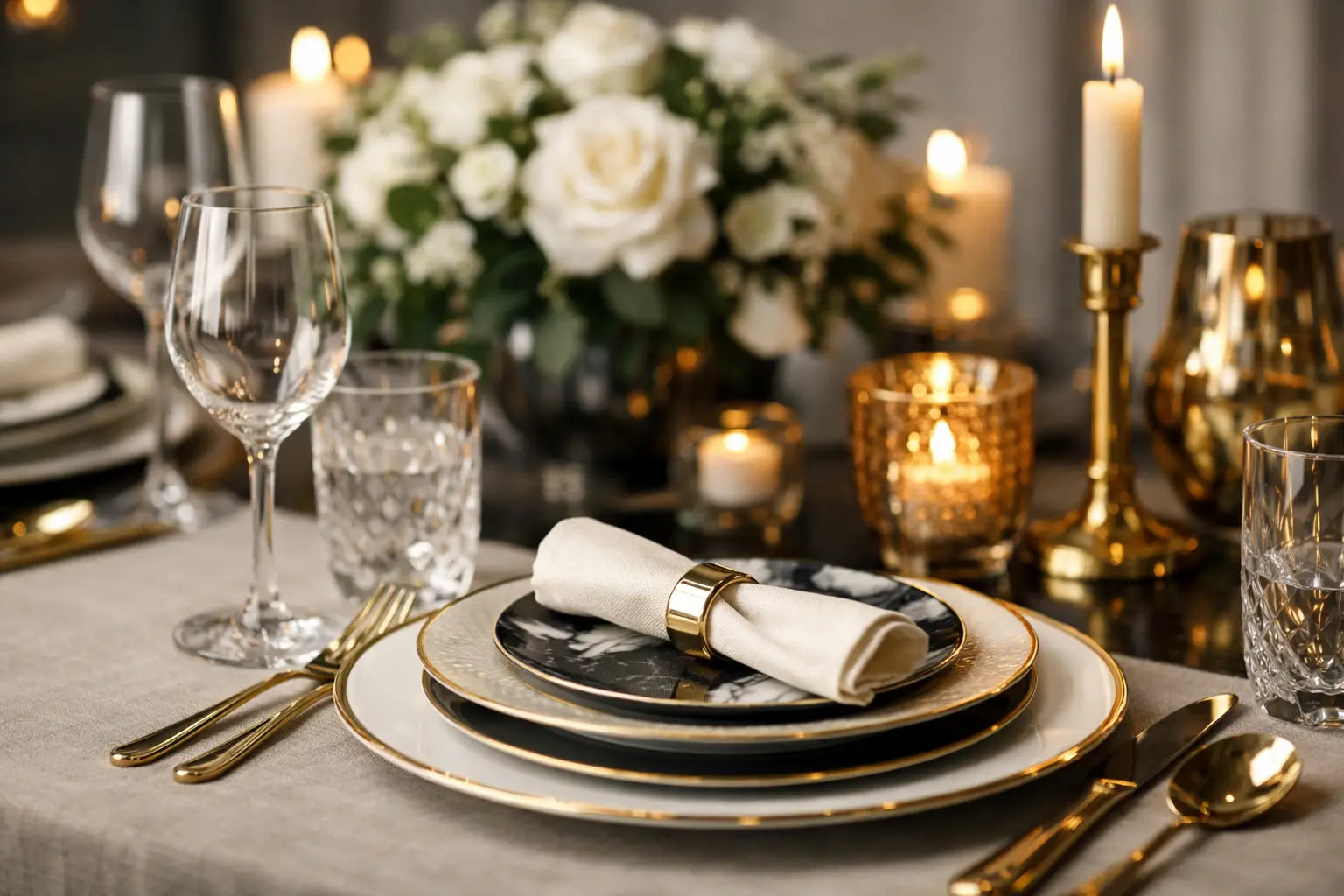
A wedding registry is complete, a holiday menu is planned, or a long-awaited dinner party is on the calendar. Then comes the question that shapes the entire table: what will you serve it on? Luxury dinnerware brings more than polish to the occasion. It gives everyday meals a sense of care and makes milestone gatherings feel properly marked.
The right collection should look beautiful when the table is fully set, but it should also suit the way you live. A delicate floral pattern may be perfect for anniversary brunches and formal teas, while crisp white bone china can move easily from a Tuesday dinner to a Thanksgiving table. Choosing well means balancing material, design, place settings, and the level of care that feels realistic for your home.
What Defines Luxury Dinnerware?
Luxury is not simply a matter of a higher price point. It is visible in the clarity of the glaze, the balance of a plate in the hand, the precision of a patterned border, and the way a collection maintains its appeal over years of use. Established makers such as Noritake, Lenox, Wedgwood, Royal Doulton, Royal Albert, and Mikasa are valued because their collections bring recognizable design heritage and dependable craftsmanship to the table.
Fine dinnerware also gives a table a point of view. A timeless ivory rim with a gold accent suggests formal elegance. Botanical motifs, soft pastels, and scalloped silhouettes create a romantic setting. Contemporary collections often rely on clean geometry, embossed textures, or restrained metallic details. None is inherently better than another. The most successful choice is the one that feels at home with your entertaining style, dining room, and existing serveware.
For gift buyers, the distinction matters. A quality dinnerware set is not a passing novelty. It is a practical, memorable wedding, housewarming, anniversary, or holiday gift that can become part of a family's traditions.
Choosing the Right Luxury Dinnerware Material
Material affects appearance, weight, durability, and care. Before falling in love with a pattern, consider how often the pieces will be used and whether they need to accommodate a busy household.
Bone China
Bone china is prized for its luminous appearance, refined feel, and surprising strength. Held to the light, it often has a delicate translucency that immediately elevates a formal place setting. It is an excellent choice for hosts who appreciate traditional dining, fine details, and a lighter plate profile.
Many modern bone china patterns are designed for regular use, but care instructions still matter. Gold or platinum banding may require hand washing and should not be placed in the microwave. If you want one collection for daily meals and special occasions alike, choose a dishwasher-safe white or softly patterned bone china set without metallic decoration.
Porcelain
Porcelain offers a polished, versatile look and is widely loved for its durability. It can be formal without feeling fragile, making it a sensible choice for families, newlyweds, and frequent hosts. White porcelain is especially adaptable: dress it up with crystal stemware and polished cutlery for a celebration, or keep the setting relaxed with linen napkins and simple serving pieces.
Porcelain also works well for shoppers building a collection over time. Start with dinner plates, salad plates, bowls, and mugs, then add serving platters, vegetable bowls, and gravy boats as holidays and hosting needs arise.
Stoneware and Textured Ceramics
For a more relaxed form of luxury, stoneware brings warmth, weight, and character. It suits homes that favor natural materials, handcrafted appearance, and generous family-style meals. A textured stoneware collection can feel special without requiring the formality of a gilded place setting.
The trade-off is that stoneware is often heavier and may show utensil marks more readily than fine china. Look for a well-finished glaze and consider how the pieces will stack in your cabinets. It is a particularly strong choice for everyday entertaining, casual celebrations, and homes where durability is a priority.
Build a Place Setting That Fits Your Life
A standard five-piece place setting typically includes a dinner plate, salad or dessert plate, bread and butter plate, cup, and saucer. This is a thoughtful foundation for formal dining, afternoon tea, and celebratory meals. Four-piece sets, often excluding the cup and saucer, are practical for households that prefer mugs or use stemware instead.
Choose the number of settings based on the gatherings you actually host, not only the size of your immediate household. A set of four can be enough for a couple starting out, but eight or twelve settings offer more freedom for holidays, family birthdays, and last-minute dinner invitations. If space allows, purchasing a larger set from the beginning helps keep the table cohesive.
It is also wise to plan for serving pieces. Matching platters, serving bowls, cake stands, teapots, and gravy boats bring a finished look to the table and remove the need to place cookware in the center of a carefully arranged setting. If a complete matching set feels too formal, pair your dinnerware with complementary crystal, serving boards, or neutral linen for a layered presentation.
Pattern, Color, and the Mood of the Table
White dinnerware remains a classic for good reason. It highlights food beautifully, works with every season, and gives you flexibility to change the mood with flowers, placemats, glassware, and accents. For a first premium set, white or ivory is often the most confident investment.
That said, pattern brings personality. A floral dinnerware collection is particularly fitting for bridal showers, spring gatherings, Mother's Day, and elegant tea service. Blue-and-white designs can feel traditional yet fresh, while a gold-rimmed collection lends ceremony to milestone celebrations. If your table already includes ornate crystal or patterned linens, a restrained dinnerware design creates balance. If your dining room is simple, a distinctive border or sculpted edge can provide the detail the setting needs.
Consider whether you want a single coordinated collection or a mixed table. Mixing works beautifully when there is an intentional thread, such as a shared color, metallic accent, or shape. For example, white dinner plates can anchor patterned salad plates, while matching chargers create continuity across a varied collection. The result should feel collected, not accidental.
Care That Protects the Investment
Fine dinnerware is made to be enjoyed, not hidden away until an occasion feels important enough. Still, thoughtful care preserves its finish and makes replacement pieces easier to match over time. Follow the maker's instructions for dishwasher and microwave use, especially with pieces that feature gold, platinum, hand-painted details, or raised decoration.
Avoid stacking plates without protection if they are stored for long periods. Soft plate separators or clean fabric layers help prevent scratches on glazed surfaces and metallic rims. When washing by hand, use a nonabrasive sponge and avoid harsh cleaners. For stubborn marks, a gentle cleaner approved for china is a better choice than vigorous scrubbing.
If you are choosing dinnerware for daily use, do not assume formal means impractical. Many premium porcelain and bone china collections are designed to meet the demands of regular meals. The key is selecting a pattern and finish that match your tolerance for maintenance. A hand-wash-only gold border can be worth it for a formal dining room, while a dishwasher-safe white collection may bring more pleasure in a kitchen used every day.
A Gift With a Place at Every Celebration
Luxury dinnerware remains one of the most meaningful gifts for a wedding, engagement, anniversary, or housewarming because it is both beautiful and useful. It marks the beginning of a home while giving the recipient something they can use for years. For a more personal presentation, pair a dinnerware set with crystal glasses, elegant cutlery, or a serving piece chosen for the recipient's favorite style of entertaining.
For couples building a registry, choosing a core collection with open-stock pieces can be especially helpful. Friends and family can contribute individual settings or complementary serveware, and the couple can add to the collection as their home and traditions grow.
The best table settings do not wait for perfection. Choose dinnerware that makes you want to set an extra place, pour something special, and turn an ordinary meal into a reason to gather.